
Affiliate Disclosure — Content Notice — Legal Disclosures — Newsletter — Home — Bottom of Post
One of the comments I hear most often
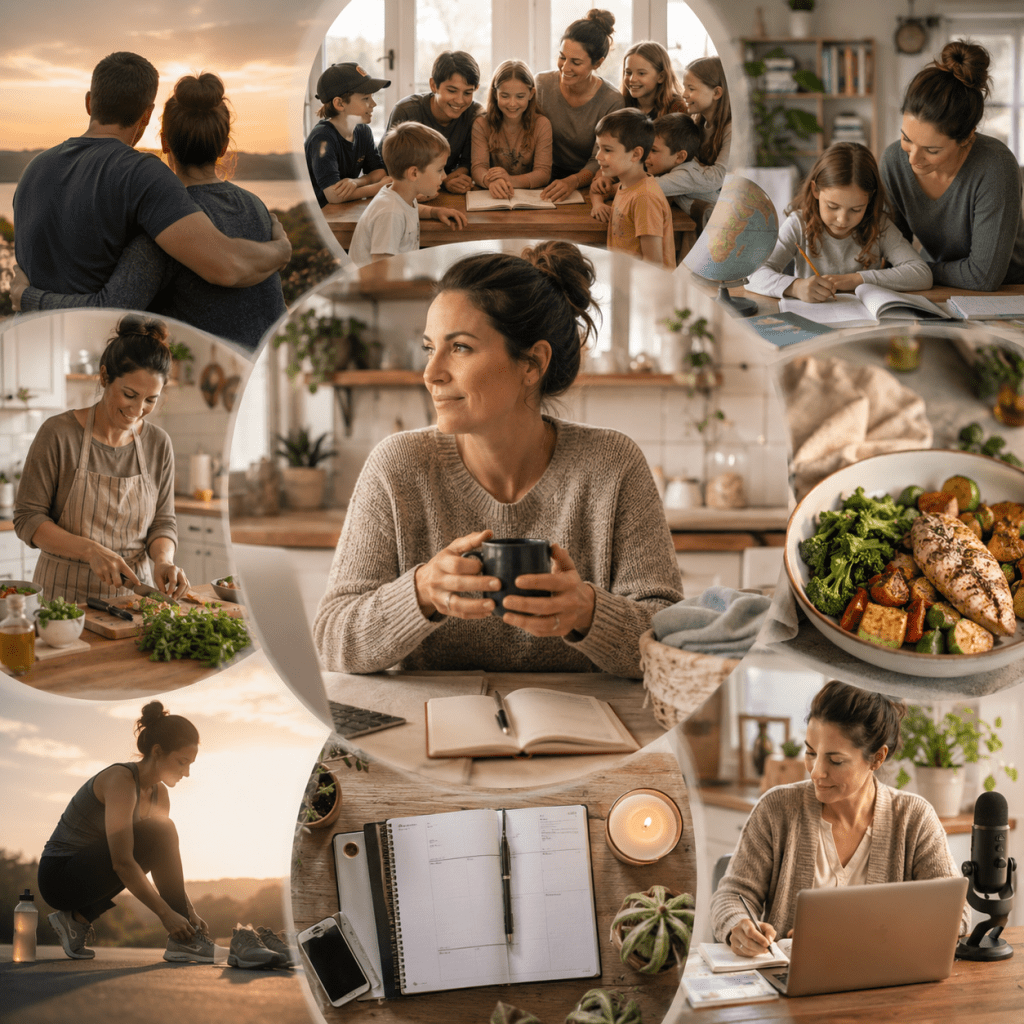
Sometimes spoken aloud, sometimes simply implied—is that my life looks like an enormous amount of work.
Eight children.
Homeschooling.
Caregiving.
Gluten-free meals.
Meal planning.
Calendars.
Family systems.
Writing.
Building a business.
Creating an app.
From the outside, it can look like my life is held together by lists, routines, reminders, and a tremendous amount of coordination.
I understand why someone might look at that and think:
“That doesn’t look very free.“
But here’s what’s interesting.
I experience many of those systems as the reason freedom is possible.
That is the paradox.
Affiliate Disclosure — Content Notice — Legal Disclosures — Newsletter — Home — Bottom of Post—TOP

The Misunderstanding
For a long time, I believed freedom meant needing less.
Less planning.
Less structure.
Less routine.
Less responsibility.
I imagined freedom meant waking up every day and simply doing whatever felt right in the moment.
It sounded peaceful.
It sounded effortless.
It sounded like the opposite of all the systems, calendars, meal plans, reminders, and routines that can appear restrictive from the outside.
But ordinary life has a way of challenging our assumptions.
The families who seemed the least overwhelmed were not usually the ones with the fewest responsibilities.
They were often the ones who had built healthy rhythms.
The people who consistently cared for their health were not relying on endless motivation.
They had created environments that made supportive choices easier.
The marriages that felt secure were not free from boundaries.
They were protected by them.
The homes that functioned well were not effortless.
They had systems that reduced unnecessary friction.
The more I paid attention, the more I realized something I had not expected:
Freedom was not growing from the absence of structure.
It was growing from wise stewardship.
The very things we sometimes resist because they look restrictive can become the things that create the greatest freedom.
None of those things remove freedom.
They help create it.
Affiliate Disclosure — Content Notice — Legal Disclosures — Newsletter — Home — Bottom of Post—TOP
Where I Used to Be
I once thought becoming more organized would eventually mean graduating beyond organization.
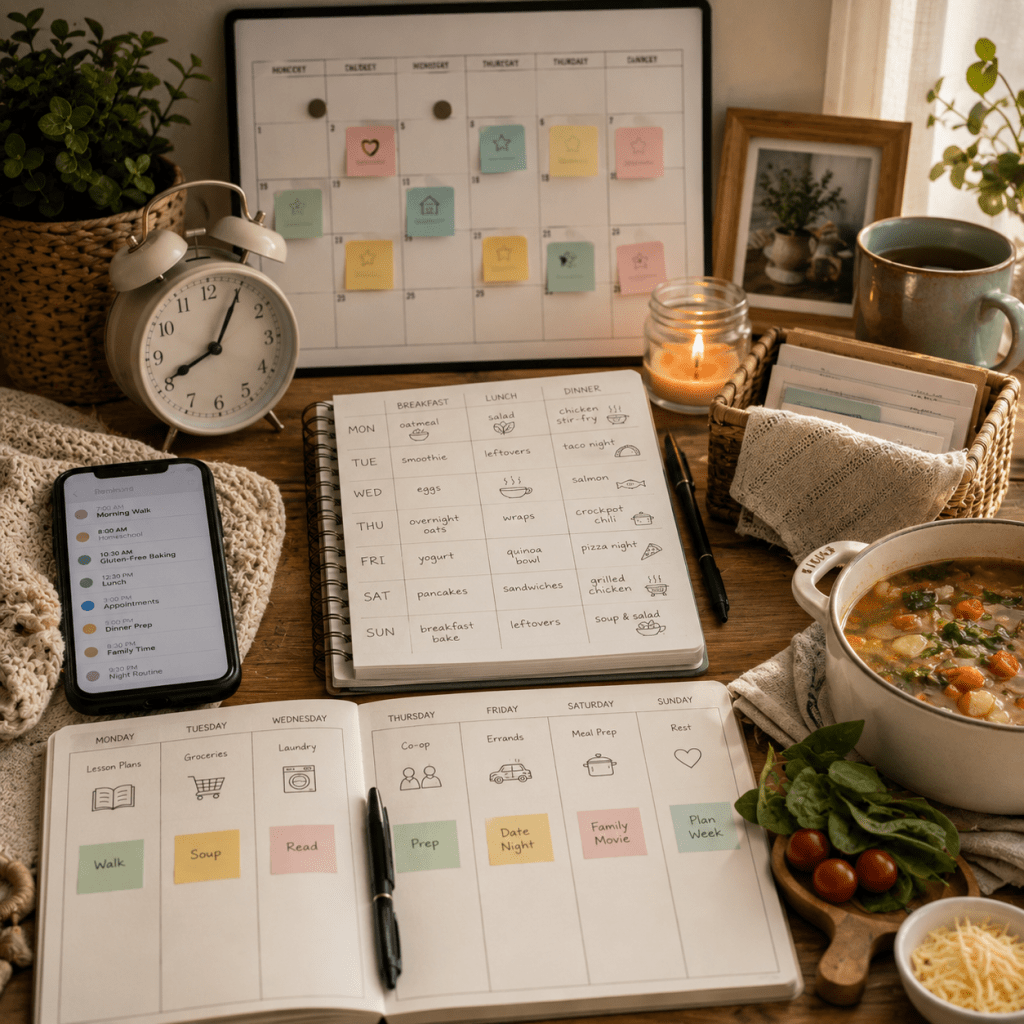
I imagined that one day I would no longer need calendars, reminders, meal plans, or routines.
I would simply remember everything.
Make good decisions effortlessly.
Have enough energy.
Know what everyone needed.
Keep the household moving.
Care for my body.
Feed my family.
Homeschool my children.
Manage appointments.
Do meaningful work.
And somehow hold all of it in my mind without needing much support.
Ordinary life eventually interrupted that fantasy.
Life taught me that support is not evidence that I have failed to become capable enough.
It is part of how I remain capable of participating.
Affiliate Disclosure — Content Notice — Legal Disclosures — Newsletter — Home — Bottom of Post—TOP
The Effort Did Not Disappear
The effort did not disappear.
It moved.
I could stop meal planning.
I would simply pay for that choice every afternoon when ten people began wondering what was for dinner.
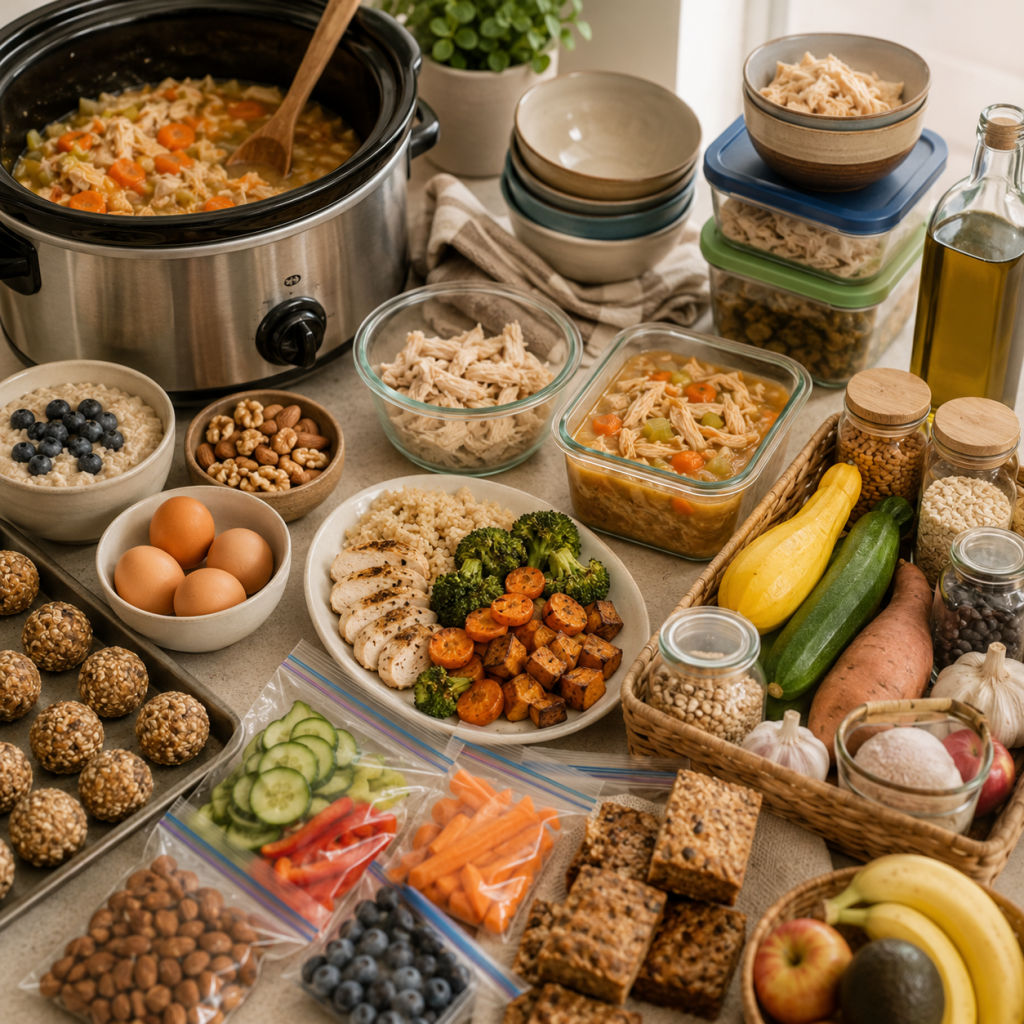
I could stop preparing soup ahead of time.
I would simply trade the effort of preparing it earlier for repeated decisions during a busier part of the day.
I could stop using reminders.
I would simply ask my memory to carry more than it reliably can.
I could stop maintaining calendars.
I would trade intentional planning for forgotten appointments, confusion, and preventable stress.
The work would still exist.
It would simply arrive later, often when I had less time, less energy, and less capacity to carry it.
That is true in our homes.
It is true in our health.
It is true in relationships.
It is true in nourishment.
It is true in recovery.
Could I avoid putting systems in place?
Absolutely.
But avoiding intentional effort does not eliminate effort.
It often turns planned effort into reactive effort.
The work does not disappear.
We choose when, where, and how we are going to carry it.
That is why meal planning feels freeing to me.
It is not because I love every part of planning, shopping, preparing, serving, storing leftovers, and cleaning the kitchen.
It is because making thoughtful decisions ahead of time reduces how many decisions I have to make later.
That is why I prepare familiar foods.
That is why I use crockpots.
That is why I make intended leftovers.
That is why I keep practical foods available.
That is why I repeat meals that work.
The preparation requires effort.
But it creates breathing room.
The same principle became painfully clear after my pulmonary embolism.
My hematologist asked me to move for fifteen minutes every two hours to keep my blood moving.
Sometimes I walked alone.
Sometimes my husband joined me.
Sometimes one of my children walked beside me.
There was a time when I could walk but did not have enough air to push my newborn in her stroller.
The walks required planning.
They required attention.
They required support.
They required me to repeatedly consider what my body could do that day.
From one perspective, that structure might have looked restrictive.
From mine, it was part of how I regained the freedom to move through my life.
The schedule did not take freedom away from me.
It helped me rebuild some of what illness had taken.
I have seen the same thing in marriage.
Boundaries can look restrictive to people who only see the line being drawn.
They may not see what the boundary protects.
Safety.
Trust.
Honesty.
Capacity.
The possibility of continuing the relationship without abandoning yourself inside it.
A healthy boundary is not simply a no.
It protects a yes.
The same is true of family systems.
A contribution list is not there because I want to control every person in my home.
It helps responsibility become visible, manageable, and shared.
Affiliate Disclosure — Content Notice — Legal Disclosures — Newsletter — Home — Bottom of Post—TOP
A Different Definition of Freedom
I no longer believe freedom means living without obligations.
I do not think it means needing no structure, no boundaries, no plans, no reminders, and no support.
For me, freedom looks more like this:
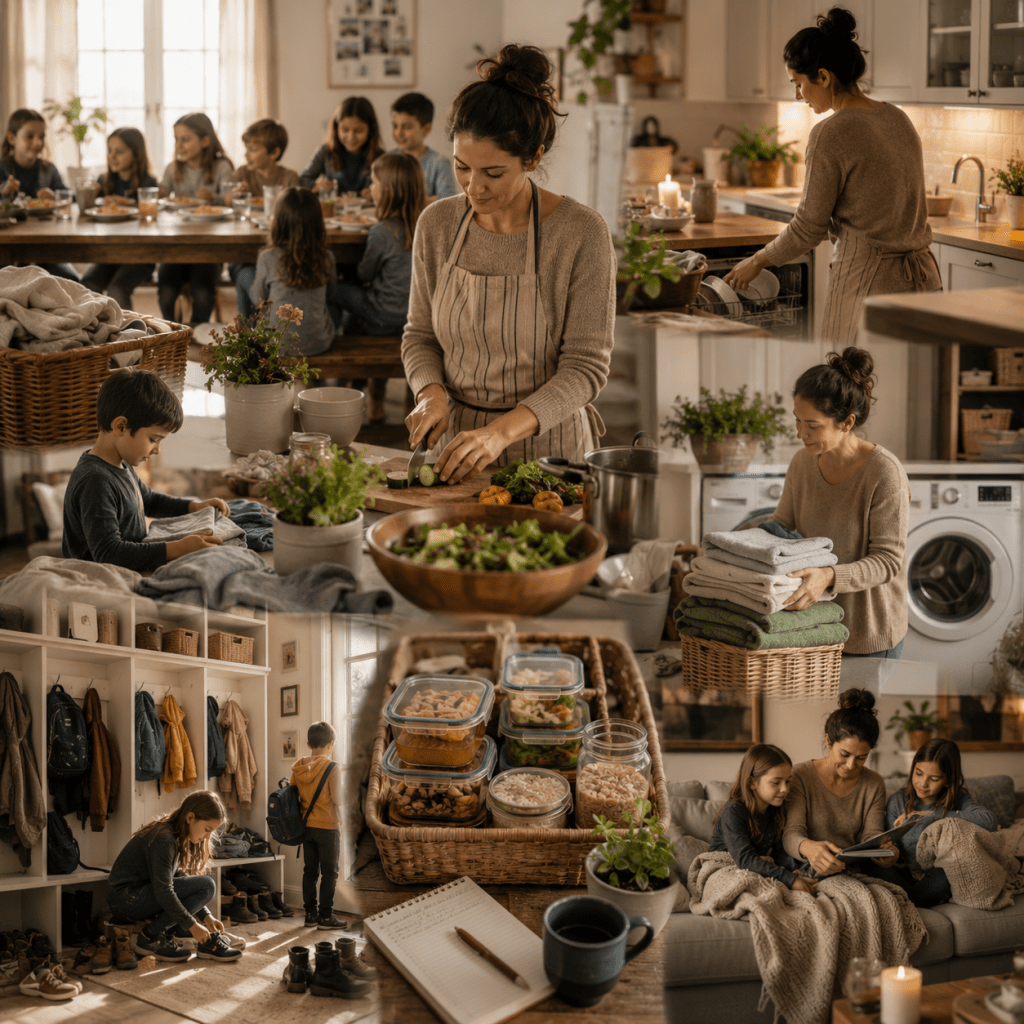
Having enough preparation that every meal does not become a crisis.
Having enough support that one person does not have to carry everything alone.
Having enough structure that the most important parts of life do not depend entirely on memory and motivation.
Having enough flexibility that the system can change when capacity changes.
Having enough boundaries that participation does not require self-abandonment.
Having enough awareness to notice when something is no longer working.
Having enough humility to receive support before collapse makes the decision for me.
That kind of freedom is not effortless.
It is cultivated.
It is protected.
It is built through ordinary decisions that may not look dramatic from the outside.
My life probably does look like a tremendous amount of work.
In many ways, it is.
There are ten people in our household.
There are meals to prepare, lessons to teach, appointments to remember, bodies to care for, relationships to tend, work to complete, and ordinary responsibilities that do not disappear simply because we want more freedom.
But I do not experience freedom as the absence of those responsibilities.
I experience it as having enough support to carry them more faithfully.
My systems do not keep me from living.
They help me participate in the life I have been given.
And the supports that may look restrictive from the outside have become some of the very things that make freedom possible on the inside.
Affiliate Disclosure — Content Notice — Legal Disclosures — Newsletter — Home —TOP

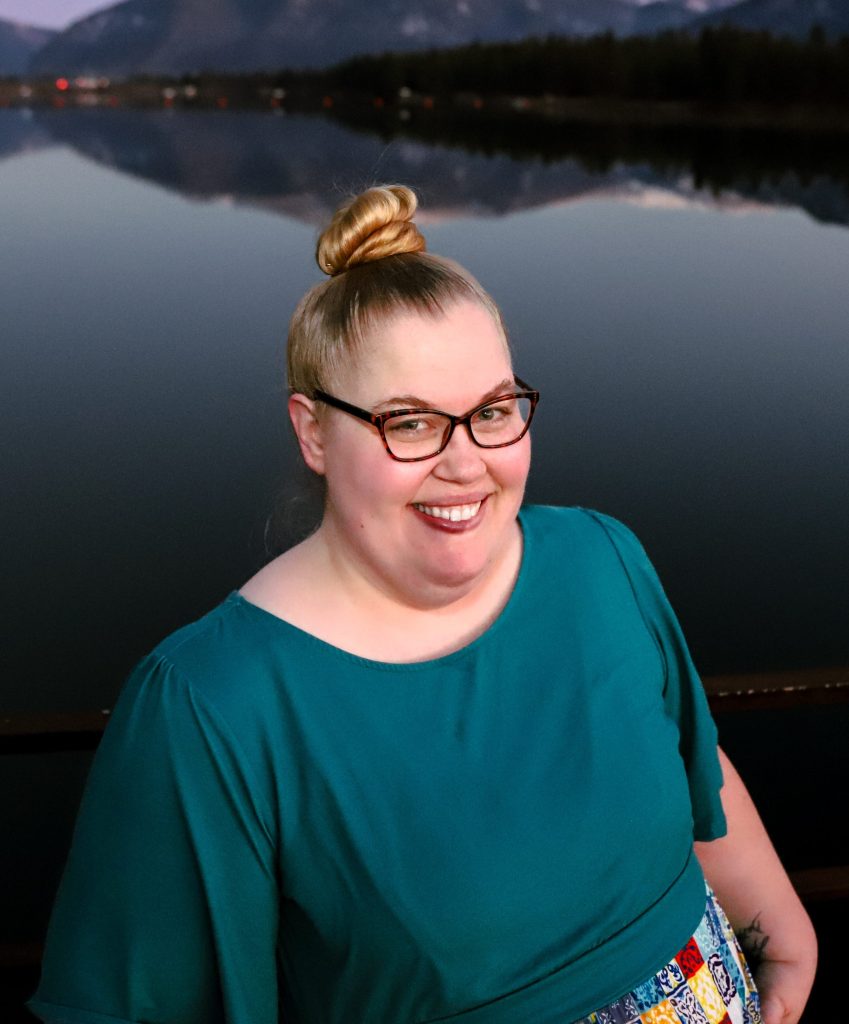

Nicole Burch is a Trim Healthy Lifestyle Coach, author, and holistic family life mentor helping women and families rebuild through rooted rhythms, personal governance, and sustainable living. Blending nourishment, discernment, and restoration, she guides others toward resilience, peace, and healing—creating lives that are grounded, aligned, and nurtured at home.
Wellness That Withstands.
Rooted. Resilient. Restored.
Affiliate Disclosure — Content Notice — Legal Disclosures — Newsletter — Home —TOP
Trim Healthy Coach Disclaimer
Nicole Burch is a Certified Trim Healthy Mama Lifestyle Coach, independently offering services based on the THM plan. This coach is not an employee or agent of Trim Healthy Mama, LLC. Coaching services are independently managed, and THM is not responsible for results, business practices, or claims made by this coach.
Affiliate Disclosures
As an Amazon Associate, I may link to specific products that I believe in and trust. This is an affiliate link, and I may receive a small commission at no additional cost to you.
As a Trim Healthy Affiliate I may link to specific products that I believe in and trust from Trim Healthy Mama, LLC. If you make any purchases through my link I may receive a small commission at no additional cost to you.
As a Queen of Thrones Affiliate I may link to specific products that I believe in. If you make any purchases through my link I may receive a small commission at no additional cost to you.







Leave a Reply