
Affiliate Disclosure — Content Notice — Legal Disclosures — Newsletter — Home — Bottom of Post

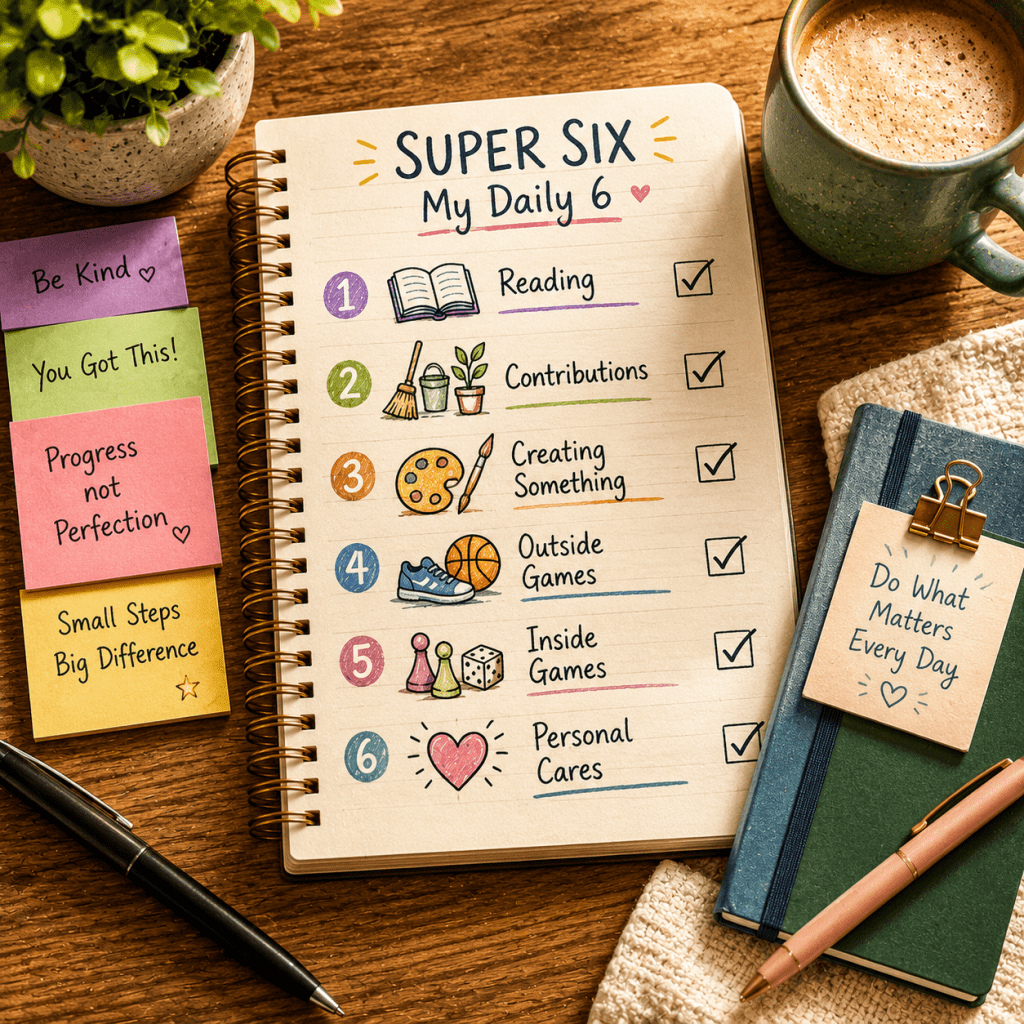
The Super Six
Summer has a way of making us believe that freedom means removing all structure.
But many families eventually discover something important:
Children often thrive with rhythm more than endless freedom.
Not rigid scheduling.
Not pressure.
Not over-optimization.
Just gentle anchors that help the household stay regulated, functional, and connected.
Without some predictable rhythm, summer can slowly drift…
The goal of summer structure is not control. It is support.
That is where our “Super Six” comes in.
It is not a strict schedule.
It is simply six categories that help orient the day.
Some days they happen beautifully.
Some days they happen minimally.
Some days survival mode changes everything.
But they give us direction.
Affiliate Disclosure — Content Notice — Legal Disclosures — Newsletter — Home — Bottom of Post — top

1. Read Something
Reading creates quiet regulation in ways we often underestimate.
It slows the nervous system.
Builds focus.
Creates transition space.
Encourages imagination.
Reduces overstimulation.
Reading does not need to look academic to count.
It can include:
Picture books
Comic books
Audiobooks
Magazines
Field guides
Recipe books
Reading-aloud
Graphic novels
Independent reading
Listening to someone read aloud, while coloring or building
The goal is not performance.
Age Adaptations
Young children: read-alouds, audio stories
Older kids: independent reading time
Teens: reading tied to interests
Neurodivergent Accommodations
Audiobooks
Movement while listening
Shorter reading windows
Visual fatigue accommodations
Interest-led reading selections
Low-Capacity Version
“Read for 10 minutes.”
Survival Mode Version
An audiobook playing during lunch or quiet time.
Affiliate Disclosure — Content Notice — Legal Disclosures — Newsletter — Home — Bottom of Post — top

2. Contributions
Summer does not remove children from household life.
They still belong in the family.
Which means they still contribute both inside and outside the home.
Contributions are not punishment.
They are participation.
They help children:
Build capability
Practice responsibility
Understand shared life
Increase practical confidence
Reduce learned helplessness
And honestly?
Households usually function better when everyone helps carry them, together.
Contributions may include:
Dishes
Laundry
Pet care
Sweeping
Tidying up
Helping prepare meals
Watering plants
Outdoor responsibilities
Age Adaptations
Littles: simple “helping” tasks
Middles: independent daily responsibilities
Teens: more Personal Governance and initiative
Neurodivergent Accommodations
Visual checklists
Body doubling
Reduced task quantity
Clear task completion definitions
Sensory accommodations
Transition warnings
Low-Capacity Version
One contribution before screens.
Survival Mode Version
Focus only on:
Trash
Dishes
Trash
Laundry
Basic reset tasks
Protect the essentials first.
Affiliate Disclosure — Content Notice — Legal Disclosures — Newsletter — Home — Bottom of Post — top
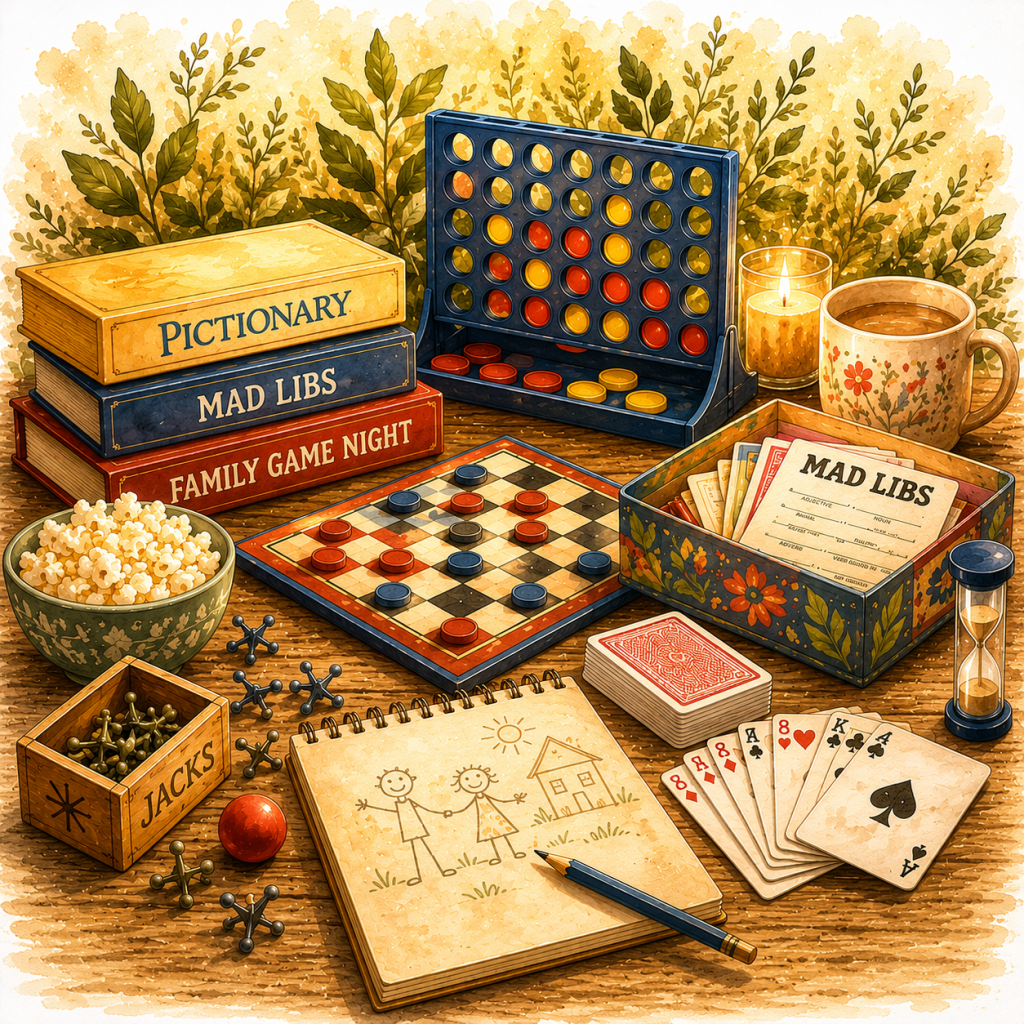
3. Inside Game
Inside Game simply means intentional indoor play that is not passive screen scrolling.
This category protects creativity, boredom tolerance, and imagination.
Examples:
LEGOs
Puzzles
Card games
Imaginative play
Board games
Forts
Coloring
Sensory bins
Dollhouses
STEM kits
Model building
More Ideas on my Amazon Storefront and Pinterest
Children do not need constant entertainment to have a meaningful summer.
In fact, boredom often becomes the doorway to creativity when overstimulation is reduced.
Age Adaptations
Adjust complexity, not necessarily the category.
Teens may prefer:
Strategy games
Hobbies
Crafts
Creative writing
Dance parties (I love a good “Rick Roll” to get them inspired)
Nicole Note:
I am Straddle-Parenting a span of fourteen years between my oldest and youngest children. I have eight to eleven children in my home throughout the week within those same ages. So, in my lived experience, learning how to adapt to people of different ages and differing abilities, is a life skill worth exploring for everyone.
Neurodivergent Accommodations
Sensory-friendly options
Lower-noise activities
Parallel play
Independent play alternatives
Special interests encouraged
Low-Capacity Version
Choose one activity bin, or one round of a card game.
Survival Mode Version
Rotate familiar comfort activities without pressure
Crosswords
Word searches
Guessing games
Rock-paper-scissors
Mad-libs
Affiliate Disclosure — Content Notice — Legal Disclosures — Newsletter — Home — Bottom of Post — top
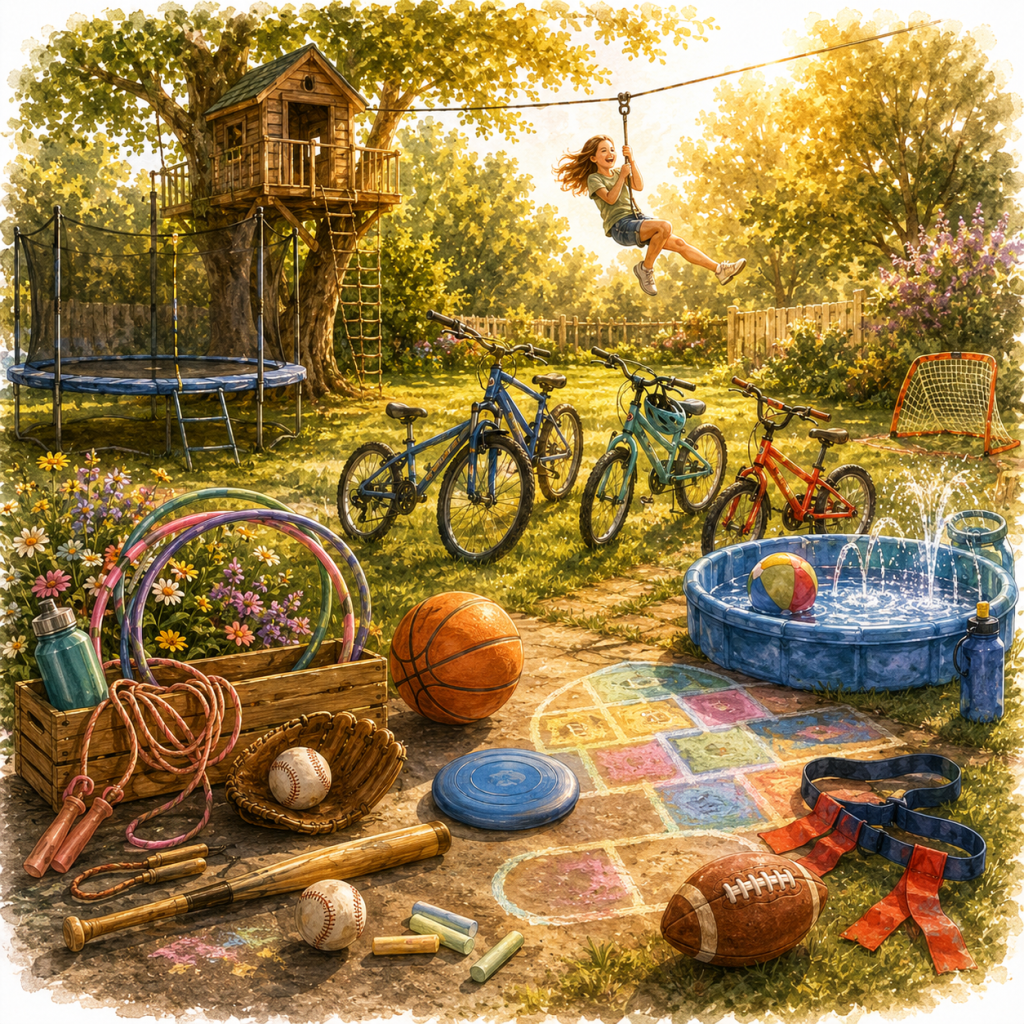
4. Outside Game
Outside time regulates many nervous systems better than we realize, because everyone gets cagey with extra energy built up inside of them.
Fresh air.
Movement.
Sunlight.
Sensory variation.
Physical exertion.
Outside does not need to become aesthetic or elaborate.
It can simply mean:
Riding bikes
Jumping on a trampoline
Walking
Sidewalk chalk
Water play
Gardening
Swinging
Collecting bugs
Helping outside
Throwing a ball
Sitting in the shade, or spending time foraging
The goal is movement and environmental variation.
Not perfection.
Age Adaptations
Littles: supervised play
Older kids: independent exploration within boundaries
Teens: walks, sports, projects, gardening, outdoor hobbies
Neurodivergent Accommodations
Temperature sensitivity support
Preferred clothing
Headphones
Lower-social-pressure activities
Structured outdoor choices
Shorter durations
Low-Capacity Version
“Go outside for 15 minutes.”
Survival Mode Version
Sit on the porch. Go for a Drive.
Open windows.
Eat lunch outside.
It still counts even when it is small.
Affiliate Disclosure — Content Notice — Legal Disclosures — Newsletter — Home — Bottom of Post — top

5. Create Something
Creation helps children feel capable.
Not just entertained.
Not just consuming.
Creating develops:
resilience
experimentation
patience
confidence
problem solving
Creation can include:
art
baking(I count any cooking and meal prep for our large family)
woodworking
sewing
painting
music
photography
Writing & Journaling
gardening
forging(something my guys have been doing)
Children benefit deeply from creating simply because humans were designed to create.
Age Adaptations
Focus on access and opportunity, not outcome quality.
Neurodivergent Accommodations
process over perfection
preferred mediums
low-demand creativity
sensory-friendly materials
collaborative creation
Low-Capacity Version
Color one page.
Bake muffins from a mix.
Plant one thing.
Survival Mode Version
Play-doh.
Markers.
Tape and cardboard.
Simple still matters.
Affiliate Disclosure — Content Notice — Legal Disclosures — Newsletter — Home — Bottom of Post — top
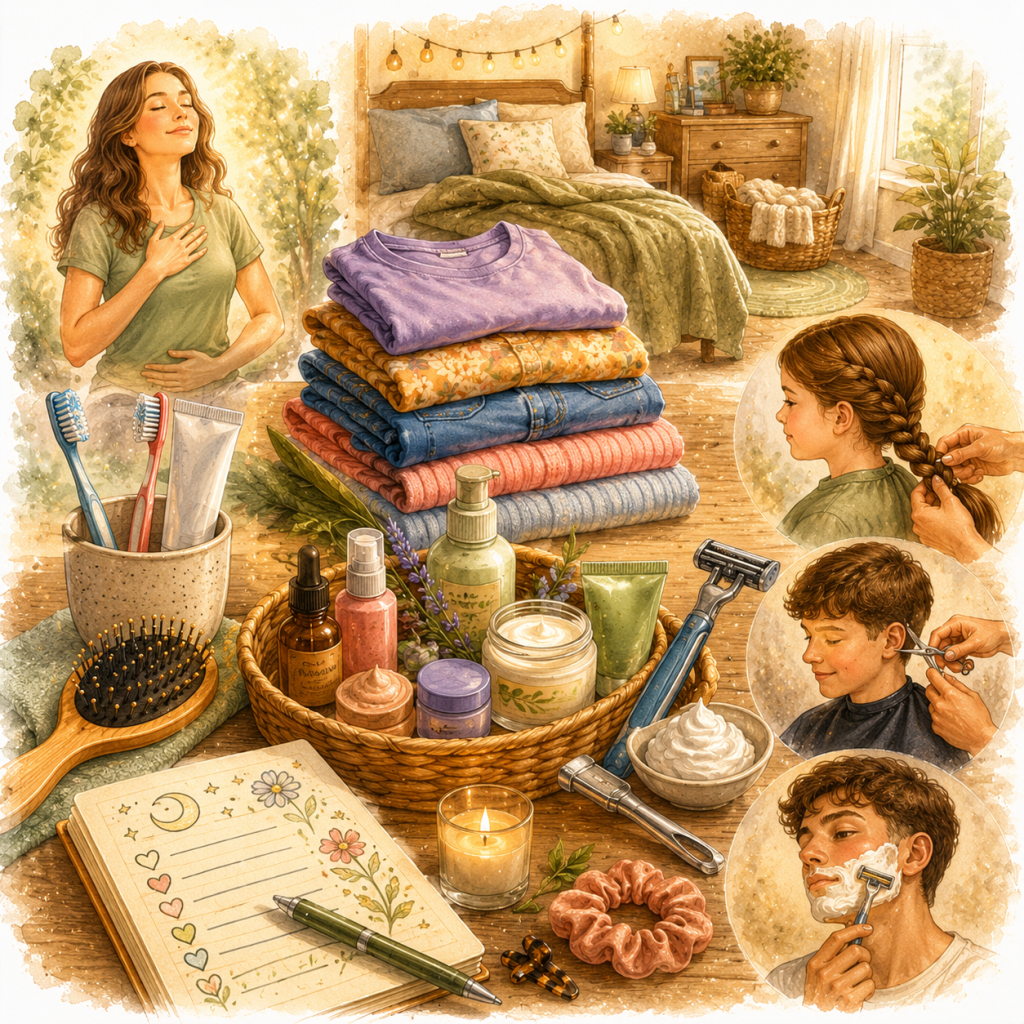
6. Personal Cares
Personal care rhythms matter during summer too.
Especially because structure often decreases.
Personal cares include:
hygiene
sleep rhythms
getting dressed
medication support
hydration
sunscreen
emotional regulation tools
Bedroom resets
sensory support needs
Children generally regulate better when their bodies and environments are supported consistently.
Age Adaptations
Increase independence gradually.
Neurodivergent Accommodations
This category often needs the most flexibility.
Supports may include:
visual routines
sensory-friendly hygiene products
adjusted expectations
body doubling
timers
reduced-step systems
accommodations around heat
transitions
sensory support needs like adaptive toothbrushes and allergen friendly toothpaste
Low-Capacity Version
Focus on: hydration, basic hygiene, sleep support
Survival Mode Version
Protect the absolute essentials first.
Some seasons are about maintaining baseline function.
That is still valuable.
Affiliate Disclosure — Content Notice — Legal Disclosures — Newsletter — Home — Bottom of Post — top
Rhythm Over Rigidity
The Super Six is not about controlling every hour.
It is about creating gentle predictability that supports the household.
Some days will be productive.
Some days will unravel.
Some days will require complete re-orientation.
That is normal.
The goal is not perfect execution.
The goal is having supportive rhythms to return to when life drifts.
Because real family life is not built through constant optimization.
It is built through sustainable rhythms that withstand real life.
Affiliate Disclosure — Content Notice — Legal Disclosures — Newsletter — Home — top



Nicole Burch is a Trim Healthy Lifestyle Coach, author, and holistic family life mentor helping women and families rebuild through rooted rhythms, personal governance, and sustainable living. Blending nourishment, discernment, and restoration, she guides others toward resilience, peace, and healing—creating lives that are grounded, aligned, and nurtured at home.
Wellness That Withstands.
Rooted. Resilient. Restored.



trim healthy coach disclosure
Nicole Burch is a Certified Trim Healthy Mama Lifestyle Coach, independently offering services based on the THM plan. This coach is not an employee or agent of Trim Healthy Mama, LLC. Coaching services are independently managed, and THM is not responsible for results, business practices, or claims made by this coach.
Content Notice — Legal Disclosures — Newsletter — Home — top
Affiliate Disclosures
As an Amazon Associate, I may link to specific products that I believe in and trust. This is an affiliate link, and I may receive a small commission at no additional cost to you.
As a Trim Healthy Affiliate I may link to specific products that I believe in and trust from Trim Healthy Mama, LLC. If you make any purchases through my link I may receive a small commission at no additional cost to you.
As a Queen of Thrones Affiliate I may link to specific products that I believe in. If you make any purchases through my link I may receive a small commission at no additional cost to you.








Leave a Reply