
Affiliate Disclosure — Content Notice — Legal Disclosures — Newsletter — Home — Bottom of Post
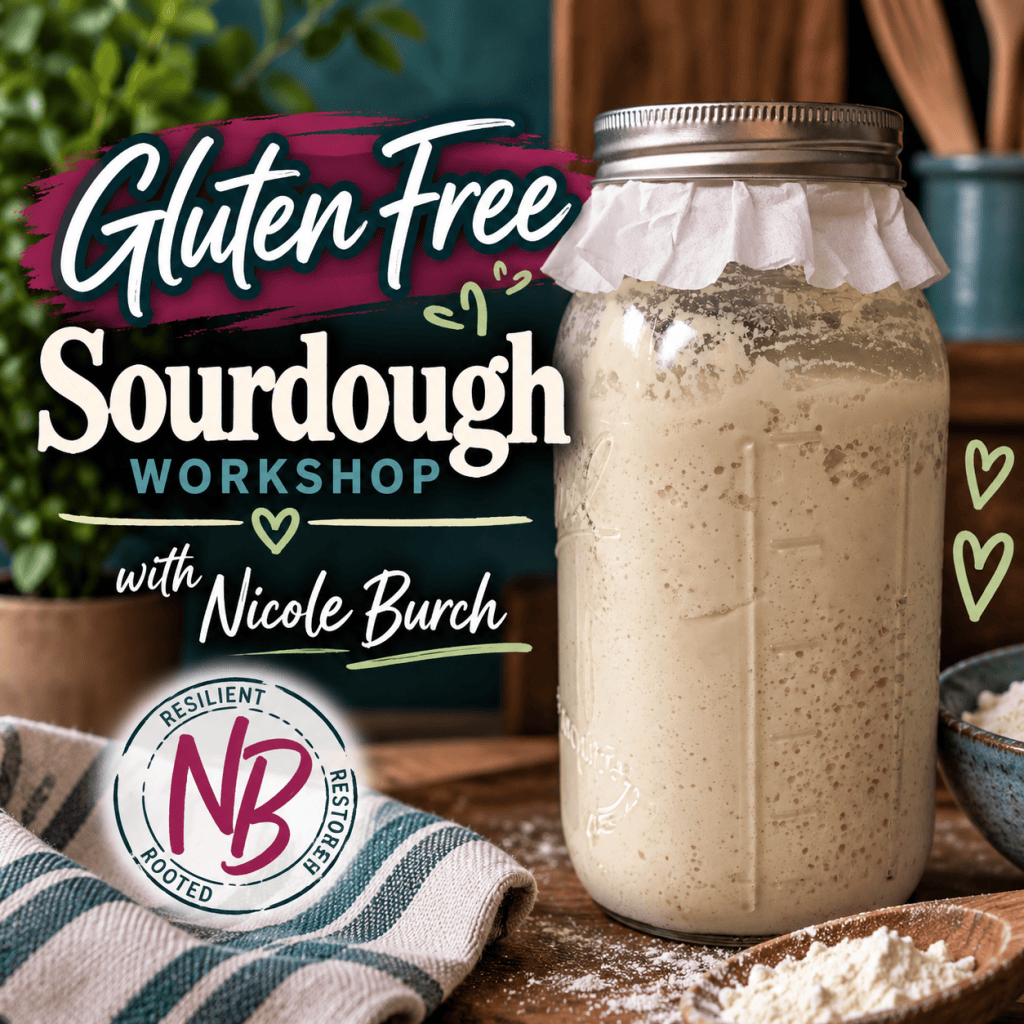
Build it…the microbes will come
In December 2020, I put some brown rice flour and our well water in a jar and decided to see what happened.
No inherited starter. No established culture. No secret sourdough knowledge.
Just flour, water, and the thought that if it didn’t work, all I would lose was some brown rice flour and a little time.
I was three months postpartum with my seventh baby. It was 2020. We were home a lot. We were running low on toilet paper…If you know, you know…and It was the perfect time for fiber-filled, whole grain, gluten-free baking experimentation.
And honestly? I had time to grow microbes, and there was a loaf-of-bread-shaped hole in my heart since 2014.
Affiliate Disclosure: Some of the links in this post are affiliate links. This means I may earn a small commission at no additional cost to you if you choose to make a purchase. I only recommend products I personally use, trust, or believe would genuinely serve my readers. Thank you for supporting Life in the Treehouse!
Affiliate Disclosure — Content Notice — Legal Disclosures — Newsletter — Home — Bottom of Post—TOP
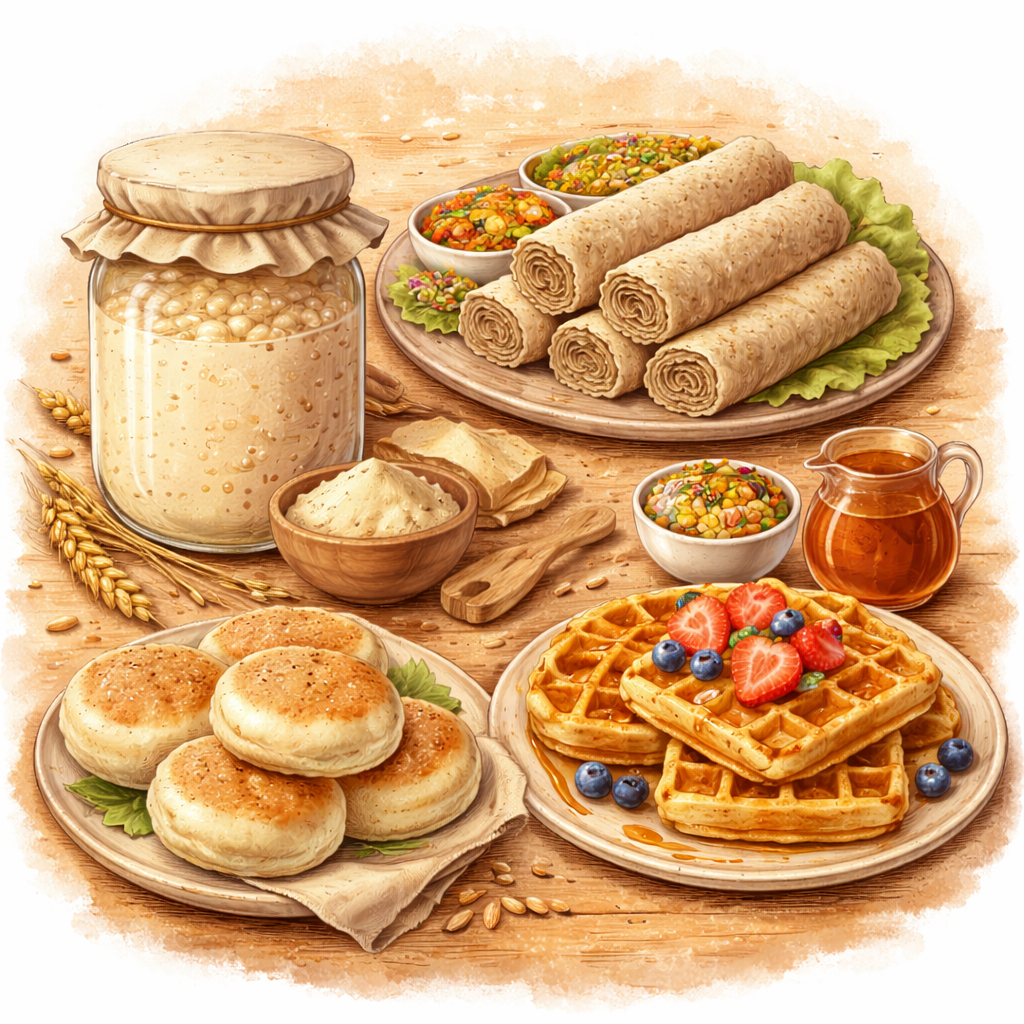
Back to Baking
I loved baking bread before two of our children were diagnosed with celiac disease in December 2014.
Not just eating bread. Not just eating bread.
It was my nap-time hobby, and I made all our bread for many years.
But gluten-filled flour couldn’t keep flying around my kitchen while I learned how to safely feed children who needed to be gluten-free. So bread baking stopped.
Over the next six years, I rebuilt our pantry, learned unfamiliar ingredients, figured out substitutions, and became a gluten-free baker.
But I still missed the practice of making a loaf of bread.
Then came the jar.
Brown rice flour.
Well water.
And a little fail-forward-and-find-out energy.
What I now teach within a seven-day workshop took me ten days that first time.
But it worked.
And because I’d spent ten days growing microbes in a jar while postpartum during 2020, I decided I deserved a title.
I became a “Sourdoughess.”
Meet “Brice“
Brice, my brown-rice gluten-free sourdough starter, was born in December 2020.
He’s going to be six years old this year.
Brice taught me something more useful than how to follow a sourdough schedule:
Paying attention to what’s in my jar.
I learned to look at bubbles, liquid, texture, smell, and activity. I learned what changed when he was hungry and what happened when the kitchen temperature changed.
Eventually, I wasn’t just following instructions. I was reading my starter.
That’s what I want to teach you.
Affiliate Disclosure — Content Notice — Legal Disclosures — Newsletter — Home — Bottom of Post—TOP

You ARE a Gluten-Free Baker
You don’t become a gluten-free baker when you finally produce a perfect loaf. Honestly, loaves are going to be one of the most challenging things you make with your whole grain, gluten-free flours.
Sometimes you’ll bake something wonderful.
Sometimes you’ll pull something out of the oven and think: Well. That’s information.
Both count.
Sometimes the experiment that begins with “What’s the worst that could happen? I lose some brown rice flour?” is still bubbling away almost six years later.
Fail forward and find out.
This Workshop Is Actually Gluten-Free
When I say gluten-free, I mean gluten-free.
Our household includes multiple children with Celiac Disease, so I’m not teaching about long-fermented wheat, ancient wheat, einkorn, spelt, or another gluten-containing grains as a workaround.
I have researched those claims extensively, and I’m not comfortable treating fermentation of gluten-containing grain as a method for making it appropriate for someone with Celiac Disease.
I won’t feed it to my children. I won’t bring it into our kitchen.
And I’m not going to teach you to do something with your health that I am unwilling to do with theirs.
This workshop starts with a gluten-free grain: Brown rice.
Cross-contact and manufacturing matter too.
Safe, not sorry. Always read the label. Verify the source.
A Note About Health & Food Boundaries
I am not a nutritionist, registered dietitian, physician, or other medical professional. I share my family’s experiences, kitchen practices, recipes, and educational information, not individualized medical or nutritional advice.
Autoimmune reactions to gluten, including celiac disease, as well as wheat allergy, gluten sensitivity, wheat-related disorders, and other conditions requiring dietary restrictions are best managed in cooperation with your own qualified health-care providers. Your appropriate level of avoidance and cross-contact protection may be different from someone else’s. Please follow the guidance established for you or your child rather than treating our family’s practices as medical instructions.
Affiliate Disclosure — Content Notice — Legal Disclosures — Newsletter — Home — Bottom of Post—TOP

How the Workshop Works
We begin by building your starter and then work through 14 feedings over seven days
Seven days gives us structure.
It is not a microbial deadline.
When I taught these workshops live, I told my fellow Sourdoughesses that 7–10 days was our general target for seeing the signs we wanted.
Mine took 10 days the first time…I got you, girl.
More importantly, I want you to learn one habit:
Look before you stir.
Smell before you feed.
Don’t stir away all the evidence of potential fermentation before you’ve looked at it.
Bubbles, hooch, smell, texture, and changes between feedings are information.
Hooch may even be your starter’s way of saying:
“Feed me, Seymour!”
The calendar gives us structure.
The starter you’re actually building gives us information.
Already a Sourdoughess? Hey girl, hey!
If your sourdough experience has been with gluten-containing grains, bring your experience—but leave your expectations.
Gluten-free starter, sponge, dough, and finished bakes don’t necessarily behave like their wheat counterparts.
We’re not trying to make gluten-free sourdough impersonate wheat sourdough.
We’re learning how gluten-free sourdough works.
Can You Use Other Gluten-Free Grains?
Yes, I’ve worked with them.
I’ve supported a sorghum starter and made a teff starter myself. There was some fail-forward-and-find-out involved because they didn’t behave exactly like Brice.
All ultimately made gluten-free sourdough using recipes I currently have.
But this workshop teaches brown rice because that’s the starter I’ve spent years feeding, observing, baking with, and teaching.
Changing the grain may change the feeding routine and microbial behavior too.
Affiliate Disclosure — Content Notice — Legal Disclosures — Newsletter — Home — Bottom of Post—TOP
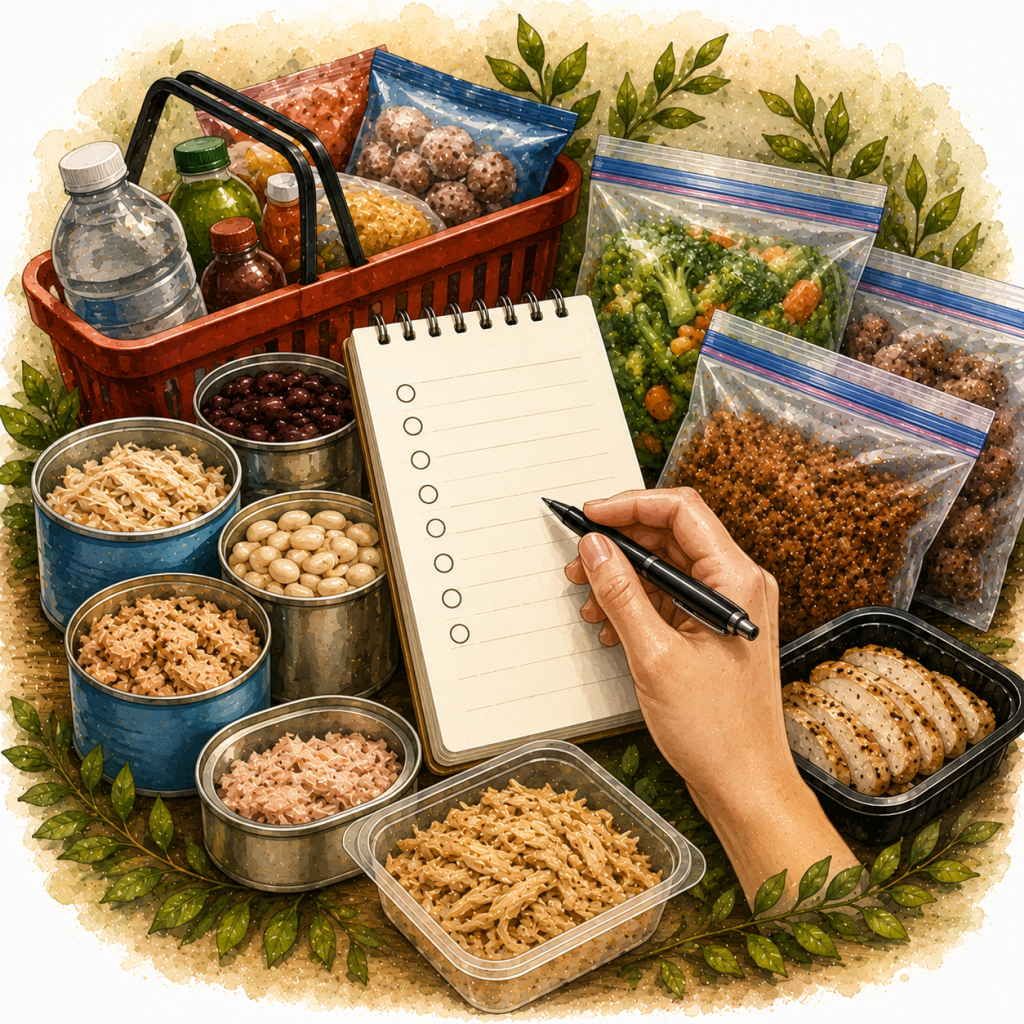
Back to Baking: Your Supply List
You don’t need a sourdough laboratory.
You need:
At least 5 pounds gluten-free brown rice flour. I buy 25 pounds at a time. You don’t need to immediately achieve my level of Sourdoughess.
Untreated water. Distilled, well water, or water that hasn’t gone on an adventure through a water-treatment or salt-treatment system. I actually keep water from a faucet that bypasses our salt treatment in my kitchen specifically for Brice. Yes, my starter has his own water.
A wide-mouth quart jar. Future You will thank Present You for the wide mouth jar.
A hat for your jar. Standard coffee filter, paper towel, cloth cover—or tissue paper if you must—secured with a rubber band, hair tie, or mason jar ring.
A long-handled plastic spoon. Some of my favorites came in a four-pack from the dollar store.
That’s it.
Boujee when needed. Budget aware always.
One Brown Rice Flour Note
The only brown rice flour workshop participants have consistently reported trouble with over the years is Arrowhead Mills.
I don’t know why, and I can’t guarantee results with any brand. It’s simply a pattern I’ve seen often enough to tell you about.
If your starter isn’t developing as expected, flour is one variable worth considering.
Start Thinking About Your First Bake
We’re not growing Brice’s cousins so they can sit around looking cute.
We’re going back to baking
While your starter establishes itself, browse my gluten-free sourdough recipes and choose what you’d like to make first. Then you’ll have time to gather whatever else you feel you need.
Preparation creates possibilities.
In this case, they might taste bread-like.
Affiliate Disclosure — Content Notice — Legal Disclosures — Newsletter — Home — Bottom of Post—TOP

Real Estate Is an Ingredient
When you’re establishing a new starter, real estate is an ingredient.
Flour matters. Water matters.
And the environment where you’re trying to establish those microbes matters.
After teaching workshops through different seasons, I found extremely hot conditions made initial establishment harder for beginners, including the increased possibility of more mold-related problems.
So if it’s hot enough to fry an egg in your car, and you don’t keep your house around 70°F with the aid of a cooling system?
This may not be your season…yet.
We don’t have air conditioning up here in Montana either.
Save your brown rice flour. Bookmark the workshop and come back when it’s cooler.
You don’t get extra Sourdoughess points for choosing the Struggle-Bus Mode.
Save your brown rice flour. Bookmark the workshop. Come back.
That doesn’t mean Brice requires a climate-controlled life once he’s established.
Far from it.
We’ll get to that in the FAQs
Then We Bake
Feeding #14 isn’t the finish line.
Once your starter is showing the signs we’re looking for, we move from building a starter to living with one.
We’ll talk about building up enough starter for a recipe, giving it more room, refrigeration, and preparing a sponge for baking.
And we’re still watching the microbes.
We want that sponge bubbly and happy. Then? We get our gluten-free bake on.
The entire Gluten-Free Sourdough Workshop is FREE on YouTube.
We’ll start with flour, water, and a jar; establish your brown-rice starter; learn what it’s telling us; and work our way toward baking.
The League of Extraordinary Microbes
Brice wasn’t the end.
There would eventually be yogurt, whey experiments, kefir, kombucha, Cultured Lemonade, fermented grains, and enough microbial adventures to earn a future branch of
Not By Bread Alone: The League of Extraordinary Microbes.
But Brice helped teach me the principle underneath all of them:
You don’t always need certainty before you begin.
You need enough information to begin safely, enough curiosity to pay attention, and enough willingness to learn from what happens.
Fail forward and find out.
Affiliate Disclosure — Content Notice — Legal Disclosures — Newsletter — Home — Bottom of Post—TOP

Gluten-Free Sourdough FAQs
Is it really gluten-free?
Yes. We begin with gluten-free brown rice flour rather than fermenting a gluten-containing grain and attempting to make it appropriate for a gluten-free diet.
Do I need an established starter?
Nope. We’re building one.
How long will it take?
The workshop gives us 14 feedings over seven days, but I generally look at 7–10 days
as our target window…Brice took 10.
The calendar gives us structure. The starter gives us information.
What if mine isn’t ready on Day 7?
Keep observing. Adjust the feedings. Rest & Repeat.
Day 7 isn’t an automatic graduation date.
Is it too cold for my starter?
Probably not just because your house isn’t maintaining somebody’s ideal sourdough temperature
Brice lives in Montana. He’s lived through seasons ranging from -40°F outside with windchill – 110°F outside during the “Dog Days of Summer”, in a wood-heated house without indoor air conditioning.
Yes, I’ve baked with him during all of those temperature ranges.
Not in the same calendar month. This is Montana, not the apocalypse.
I don’t use an oven light, seedling mat, heating pad, or special warming setup when I’m building Brice up for baking.
I’m a “Type-C” baker. I’m not going to micromanage every variable.
The indoor temperature may change the pace. I feed him. I watch him & I adjust.
Then why do you warn me about starting one when it’s really hot?
Because real estate is an ingredient in an unestablished starter.
A brand-new culture trying to establish itself is different from Brice, who has been doing this since 2020.
Once your starter is fully mature?
It’s just a hot flash.
Can I use a different gluten-free grain?
You can experiment. I’ve worked with sorghum and teff starters successfully, but they didn’t behave or feed exactly like Brice.
This workshop specifically teaches brown rice
I’ve made wheat sourdough for years. Is this basically the same?
No. Your experience is useful, but gluten-free sourdough can behave differently.
Bring your experience. Leave your expectations.
What if I miss a feeding?
Don’t immediately assume you’ve killed it. It’s a very forgiving process.
Real life happens—even to Sourdoughesses. Look at what’s happening in your jar and use the workshop troubleshooting guidance.
What if I see mold?
Don’t stir visible mold into your starter and hope for the best.
Follow the mold guidance in the workshop.
What do I do with the early discard?
Treat it as immature discard rather than assuming it’s ready for a discard recipe. I don’t bake with mine when it’s immature.
I feed it to my chickens or my composting worms.
How do I know when it’s ready to bake?
Not simply because you’ve reached Day 7 or Feeding #14.
We’re looking for the signs of a mature, active starter—which is exactly why you’ve spent the workshop learning to observe it.
What happens after the starter is established?
We learn to live with it.
Build it up. Refrigerate it when appropriate. Prepare it for a recipe. Make a sponge. Then, get your gluten-free bake on.
What if I have absolutely no idea what I’m doing?
Perfect…Fail Forward and Find Out.
Neither did I in 2020. I got you, girl.
Affiliate Disclosure — Content Notice — Legal Disclosures — Newsletter — Home —TOP



Nicole Burch is a Trim Healthy Lifestyle Coach, author, and holistic family life mentor helping women and families rebuild through rooted rhythms, personal governance, and sustainable living. Blending nourishment, discernment, and restoration, she guides others toward resilience, peace, and healing—creating lives that are grounded, aligned, and nurtured at home.
Wellness That Withstands.
Rooted. Resilient. Restored.
Affiliate Disclosure — Content Notice — Legal Disclosures — Newsletter — Home —TOP
Trim Healthy Coach Disclaimer
Nicole Burch is a Certified Trim Healthy Mama Lifestyle Coach, independently offering services based on the THM plan. This coach is not an employee or agent of Trim Healthy Mama, LLC. Coaching services are independently managed, and THM is not responsible for results, business practices, or claims made by this coach.
Affiliate Disclosures
As an Amazon Associate, I may link to specific products that I believe in and trust. This is an affiliate link, and I may receive a small commission at no additional cost to you.
As a Trim Healthy Affiliate I may link to specific products that I believe in and trust from Trim Healthy Mama, LLC. If you make any purchases through my link I may receive a small commission at no additional cost to you
As a Queen of Thrones Affiliate I may link to specific products that I believe in. If you make any purchases through my link I may receive a small commission at no additional cost to you.
River Hills Harvest and Azure Standard referral links may be linked to specific products or images on this blog. If you make any purchases through my link I may receive a small commission at no additional cost to you.







Leave a Reply