
Affiliate Disclosure — Content Notice — Legal Disclosures — Newsletter — Home — Bottom of Post
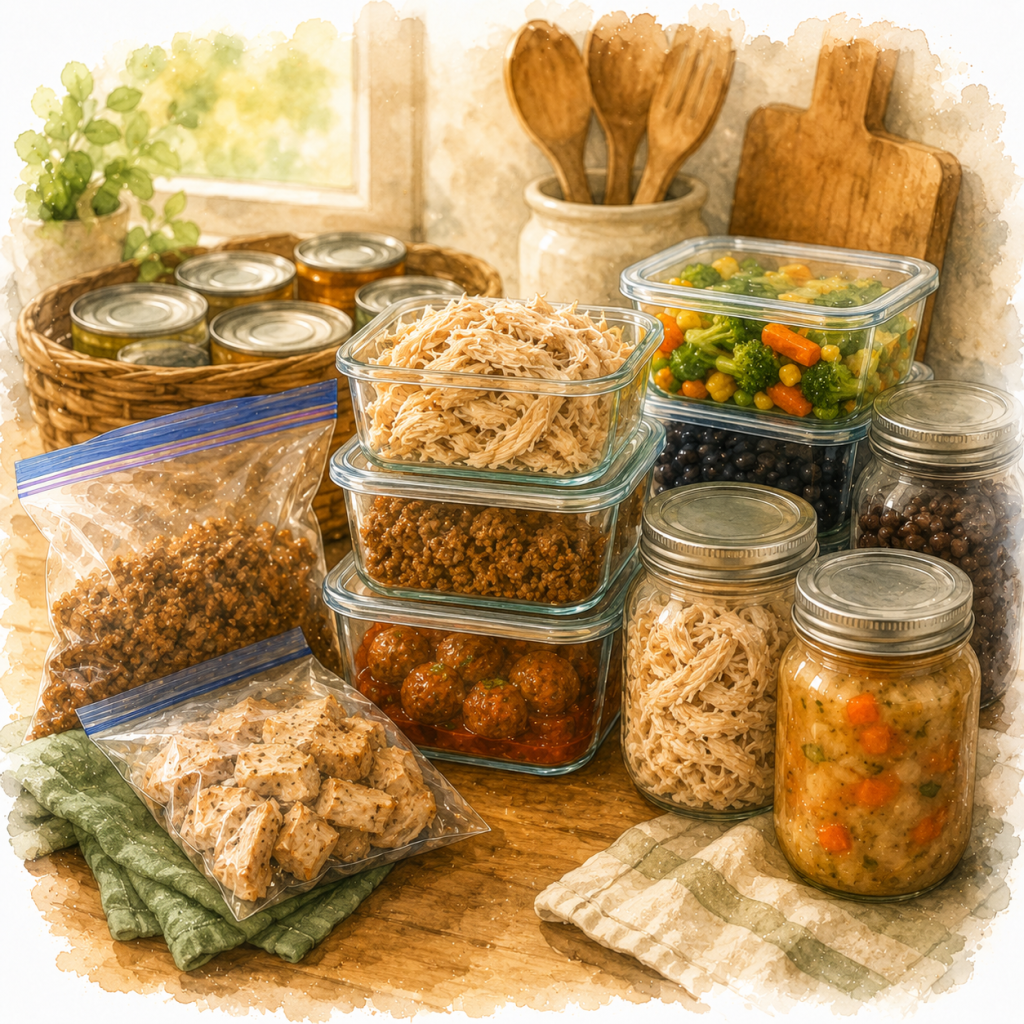
Intended Leftovers
For years, I thought meal preparation had to look a certain way.
Color-coded containers.
Entire afternoons dedicated to cooking.
Perfectly portioned meals lined up in the refrigerator.
And while those approaches work beautifully for some people, I eventually realized they weren’t the only way to create support.
In fact, one of the most helpful food strategies I’ve ever developed doesn’t look much like traditional meal prep at all.
I call it Intended Leftovers.
Affiliate Disclosure — Content Notice — Legal Disclosures — Newsletter — Home — Bottom of Post—TOP

What Are Intended Leftovers?
When most people hear the word “leftovers,” they think about food remaining after a meal.
I mean something different.
Intended Leftovers are foods I intentionally purchase, prepare, or store because they allow me to recreate meals quickly in the future.
Not because they’re leftovers.
Because they’re future support.
Examples might include:
Canned chicken
Canned tuna
Canned salmon
Beans
Frozen vegetables
Frozen meatballs
Cooked taco meat in the freezer
Shredded chicken prepared ahead
Pre-cooked proteins
Soup stored in meal-sized portions
These foods have already completed part of the work.
When capacity is low, they help close the gap between needing food and having food available.
Affiliate Disclosure — Content Notice — Legal Disclosures — Newsletter — Home — Bottom of Post—TOP

Why I Stopped Thinking About Convenience as Cheating
For a long time, I think many of us absorbed the idea that convenience foods were somehow less valuable.
That if we weren’t making everything from scratch, we were taking shortcuts.
But life taught me something different.
Sometimes convenience is not laziness.
Sometimes convenience is support.
Sometimes convenience is what allows nourishment to happen at all.
As a caregiver, parent, homemaker, coach, and human being navigating real life, I have learned that support systems matter.
Food is one of those support systems.
When I keep Intended Leftovers available, I’m not lowering my standards.
Affiliate Disclosure — Content Notice — Legal Disclosures — Newsletter — Home — Bottom of Post—TOP
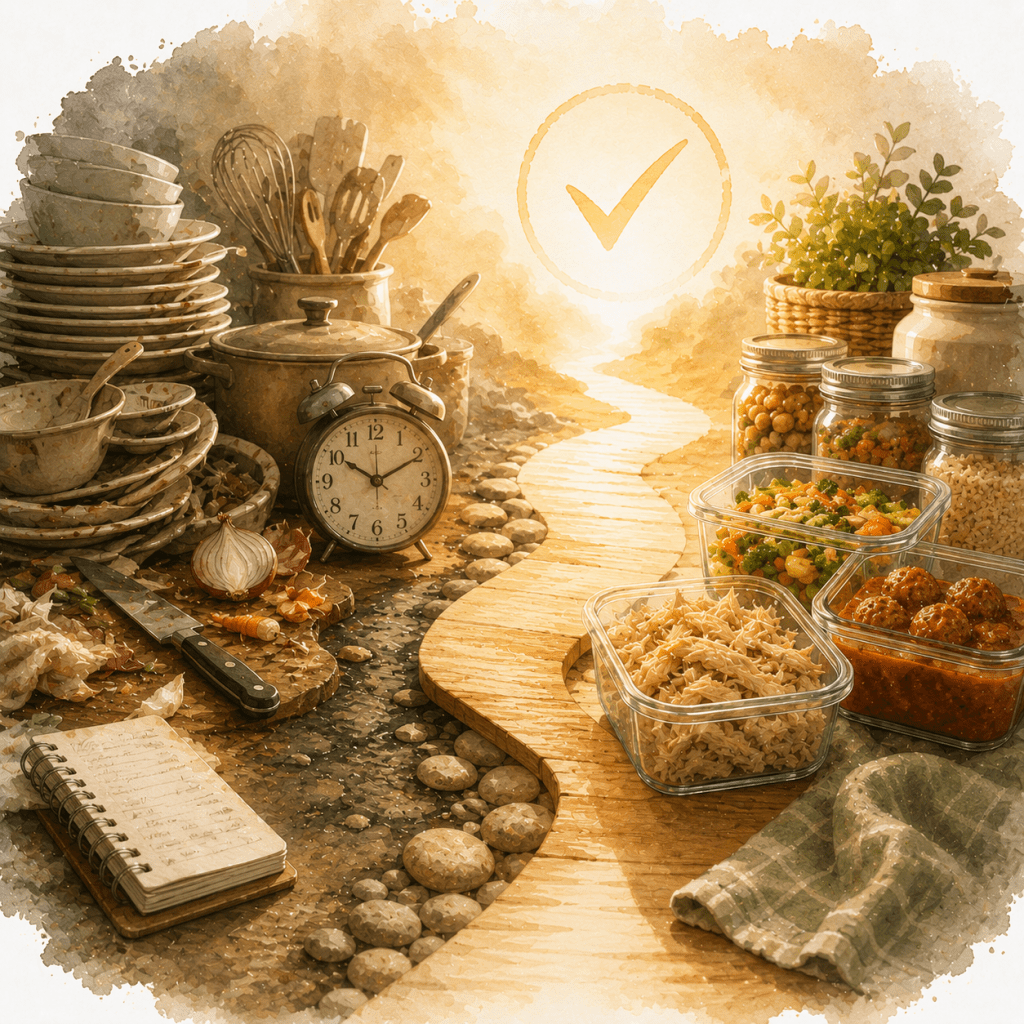
Intended Leftovers Reduce Friction
One of the biggest barriers to consistent nourishment isn’t knowledge.
It’s friction.
Friction looks like:
Being tired
Decision fatigue
Limited time
Caregiving responsibilities
Executive functioning challenges
Busy schedules
Emotional exhaustion
The more steps required between hunger and food, the harder it becomes to nourish ourselves consistently.
Intended Leftovers remove steps.
They make supportive choices easier to access.
And when supportive choices become easier, they’re more likely to happen.
Affiliate Disclosure — Content Notice — Legal Disclosures — Newsletter — Home — Bottom of Post—TOP
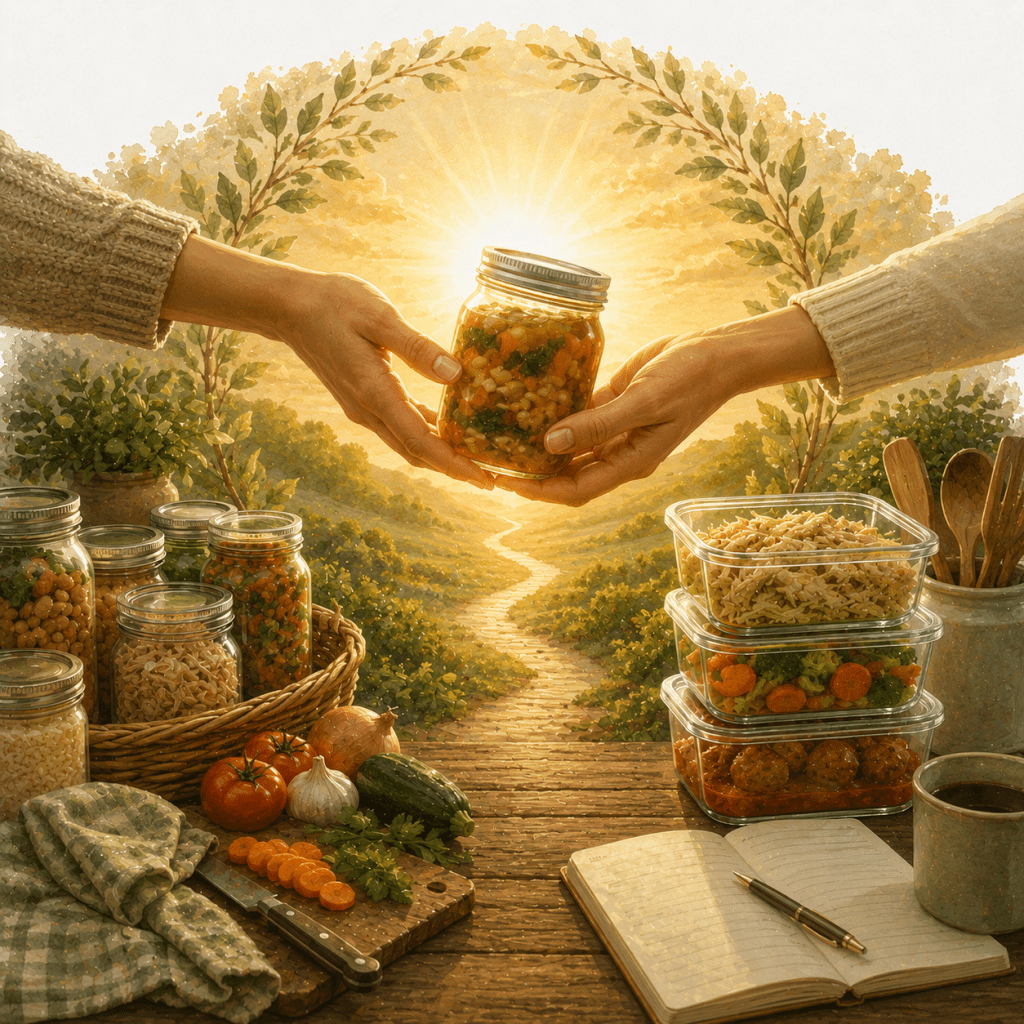
Today’s Capacity Can Support Tomorrow’s Capacity
This may be my favorite thing about Intended Leftovers.
They allow today’s capacity to support tomorrow’s capacity.
The version of me with energy can create support for the version of me who may need it later.
That’s a powerful form of self-care.
Not the social media version.
Not the spa-day version.
The practical version.
The version that says:
“I know future me might be tired.”
“I know future me might be overwhelmed.”
“I know future me may need help.”
“So I’m going to leave her something useful.”
That might be a freezer meal.
It might be cooked taco meat.
It might be a stocked pantry.
It might be canned chicken.
The specific food matters less than the principle.
Support yourself before you need support.
Affiliate Disclosure — Content Notice — Legal Disclosures — Newsletter — Home — Bottom of Post—TOP

Intended Leftovers Are Capacity-Friendly
One reason I love this strategy is because it works across a wide range of capacity levels.
On high-capacity weeks, I might prepare:
Soup for the freezer
Shredded chicken
Taco meat
Chopped vegetables
On lower-capacity weeks, I might simply purchase:
Canned proteins
Frozen vegetables
Beans
Pre-cooked foods that fit our boundaries
Both approaches create support.
Both approaches count.
Both approaches are valid.
Sometimes we need to stop grading ourselves on how support was created and simply appreciate that support exists.
Affiliate Disclosure — Content Notice — Legal Disclosures — Newsletter — Home — Bottom of Post—TOP
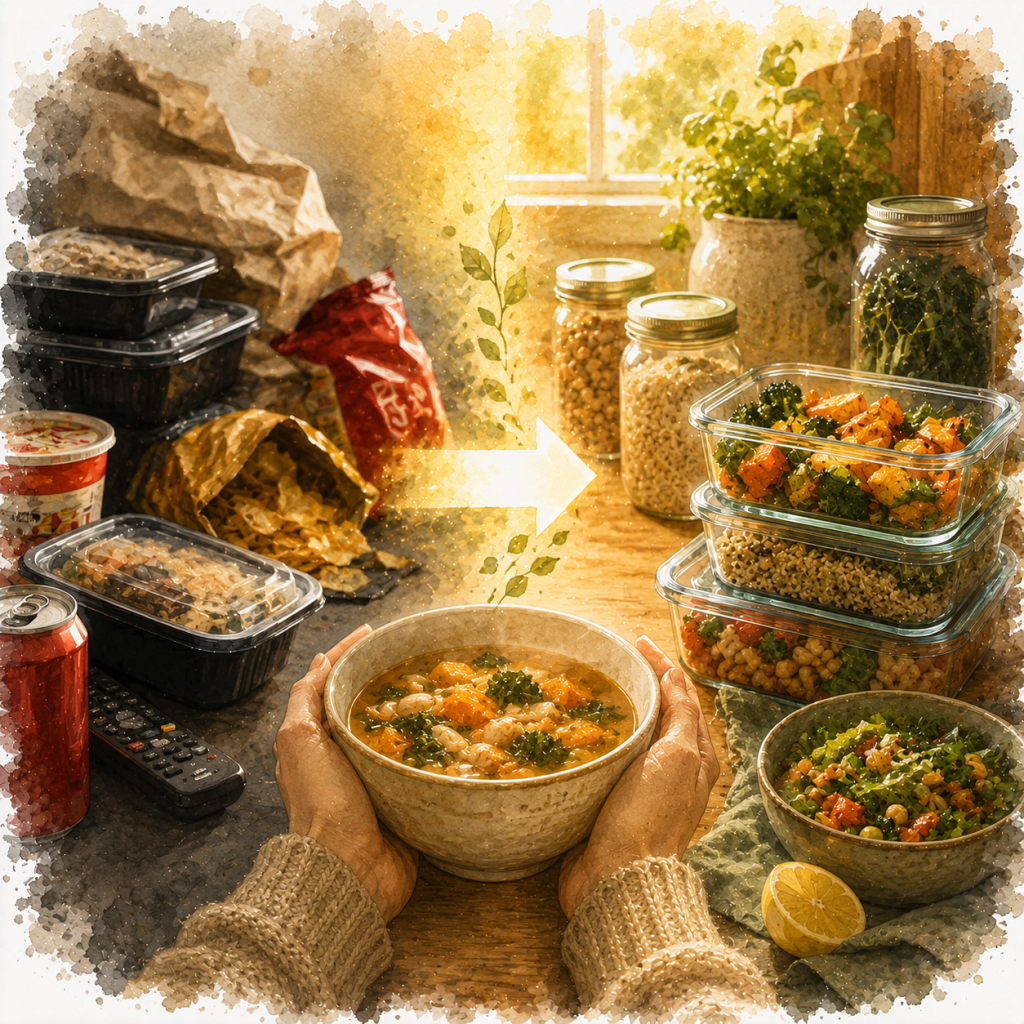
Food Boundaries Change What Convenience Looks Like
Our family has food boundaries.
We’ve been gluten-free for years.
We’ve navigated other dietary needs and preferences as well.
Because of that, convenience often looks different for us than it might for another family.
For example, many people rely on rotisserie chickens. We don’t.
Cross-contamination concerns make them impractical for our household.
That doesn’t mean convenience disappears.
It simply means our version of convenience looks different.
That’s why I encourage people to create their own Intended Leftovers list.
Ask yourself:
What foods fit our boundaries?
What foods reduce friction?
What foods help us build meals quickly?
Those foods become part of your support system.
Affiliate Disclosure — Content Notice — Legal Disclosures — Newsletter — Home — Bottom of Post—TOP
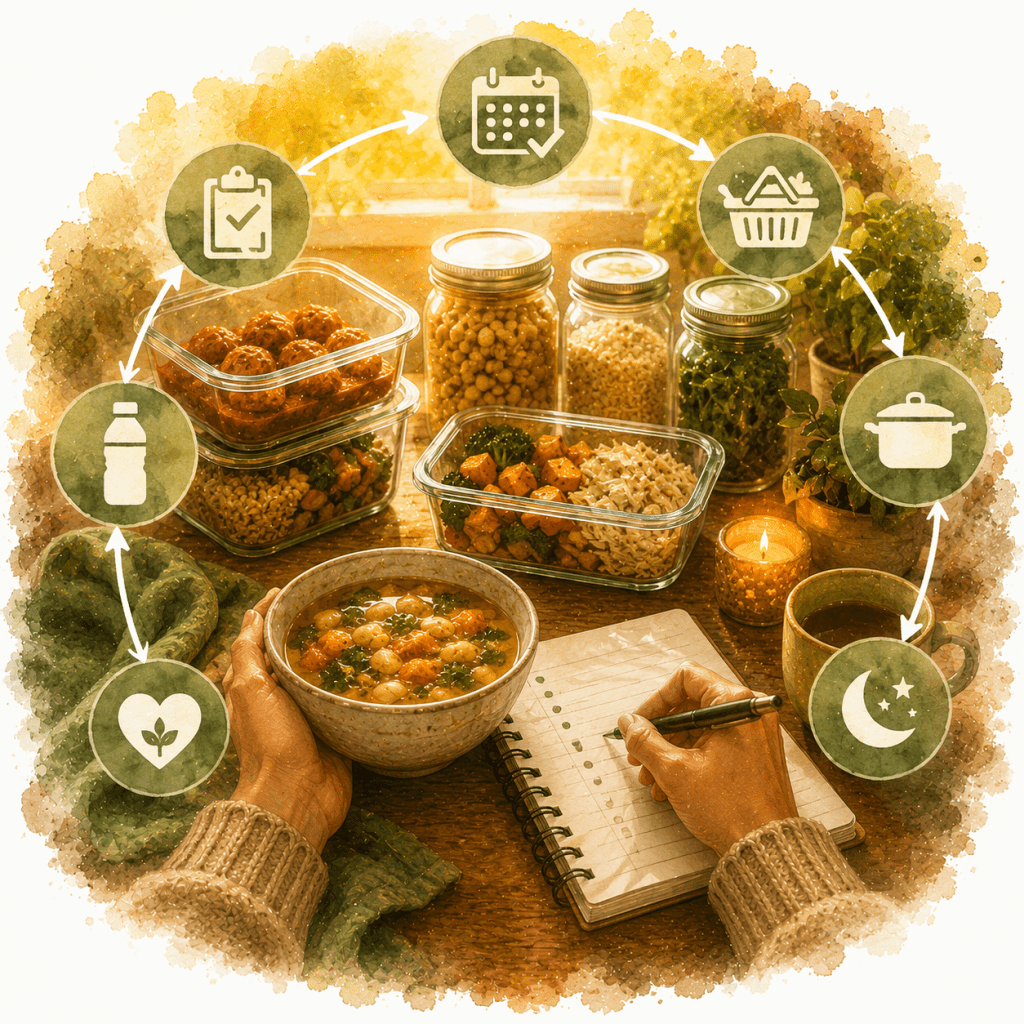
Intended Leftovers Are a Form of Resilience
Resilience isn’t about never needing help.
It’s about creating systems that help you recover when life gets difficult.
Intended Leftovers are one of those systems.
They’re quiet.
They’re simple.
They’re rarely impressive.
But they work.
And over time, I’ve learned that the most supportive systems are often the least glamorous.
A freezer meal.
A can of chicken.
A container of taco meat.
A bag of frozen vegetables.
These small choices create a bridge between overwhelm and nourishment.
Between exhaustion and support.
Between survival and restoration.
Affiliate Disclosure — Content Notice — Legal Disclosures — Newsletter — Home — Bottom of Post—TOP

The Goal Isn’t Perfection
The goal isn’t to have a perfectly stocked freezer.
The goal isn’t to prepare every meal ahead of time.
The goal is simply to make nourishment more accessible.
To reduce friction.
To increase support.
To honor capacity.
To remember that future you deserves care too.
That’s why I keep Intended Leftovers.
Not because life always goes according to plan.
Because it doesn’t.
And when life gets complicated, I’m always grateful when past Nicole left something helpful behind.
Read Next: Foundational Foods for Unplanned Weeks
Take the Next Step: Join Flexible Foundations.
Track Your Foundations: Fuel Flow App (track meals that consistently become your personal Intended Leftovers list)
Affiliate Disclosure — Content Notice — Legal Disclosures — Newsletter — Home —TOP



Nicole Burch is a Trim Healthy Lifestyle Coach, author, and holistic family life mentor helping women and families rebuild through rooted rhythms, personal governance, and sustainable living. Blending nourishment, discernment, and restoration, she guides others toward resilience, peace, and healing—creating lives that are grounded, aligned, and nurtured at home.
Wellness That Withstands.
Rooted. Resilient. Restored.
Affiliate Disclosure — Content Notice — Legal Disclosures — Newsletter — Home —TOP
Trim Healthy Coach Disclaimer
Nicole Burch is a Certified Trim Healthy Mama Lifestyle Coach, independently offering services based on the THM plan. This coach is not an employee or agent of Trim Healthy Mama, LLC. Coaching services are independently managed, and THM is not responsible for results, business practices, or claims made by this coach.
Affiliate Disclosures
As an Amazon Associate, I may link to specific products that I believe in and trust. This is an affiliate link, and I may receive a small commission at no additional cost to you.
As a Trim Healthy Affiliate I may link to specific products that I believe in and trust from Trim Healthy Mama, LLC. If you make any purchases through my link I may receive a small commission at no additional cost to you.
As a Queen of Thrones Affiliate I may link to specific products that I believe in. If you make any purchases through my link I may receive a small commission at no additional cost to you.







Leave a Reply