
Affiliate Disclosure — Content Notice — Legal Disclosures — Newsletter — Home — Bottom of Post
I have included links. If you make a purchase through any of these links in the post, as an Amazon Influencer, I may receive a small commission at no additional cost to you.
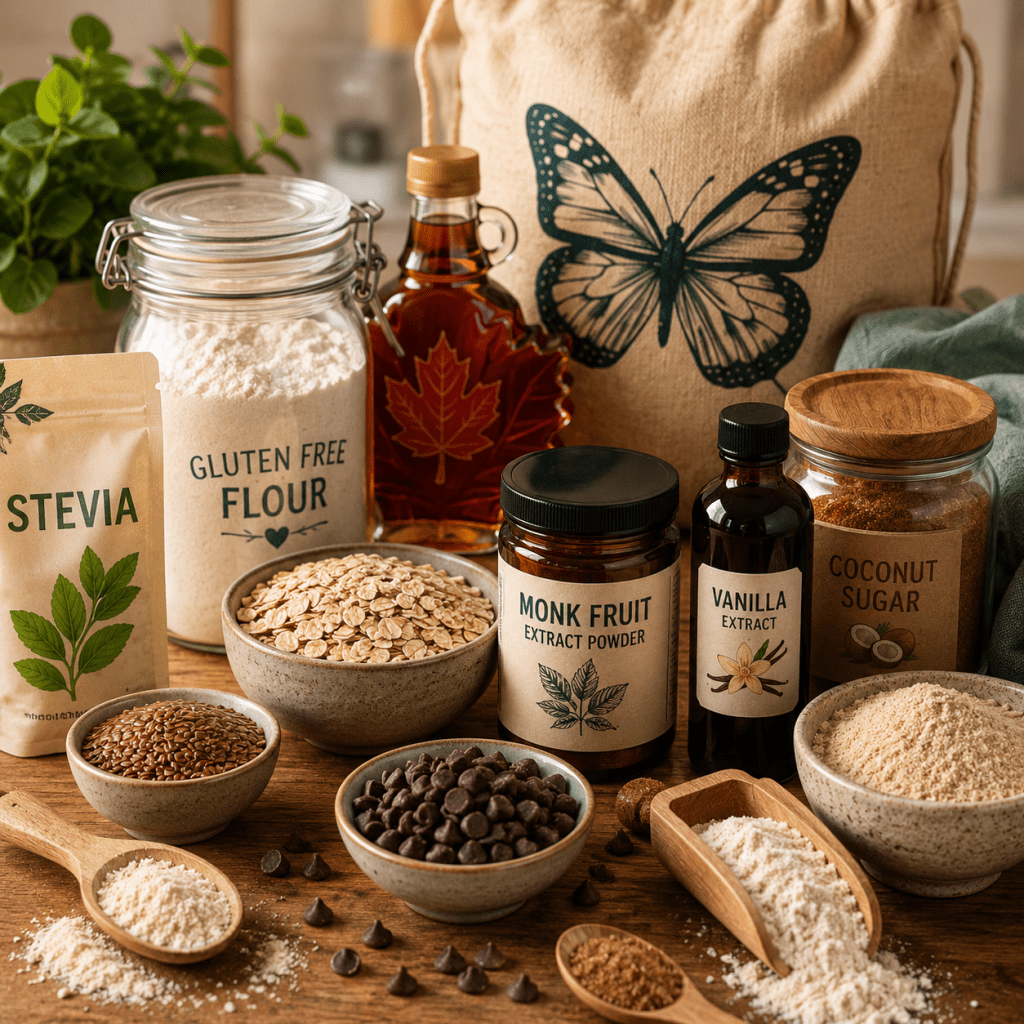
Why I Switched from Stevia to Monk Fruit
Sweeteners are one of those topics that can become surprisingly heated.
Some people believe all sugar should be eliminated. Others think alternative sweeteners are worse than sugar itself. If you spend any time online, you’ll quickly discover that everyone seems to have a strong opinion.
Mine is much quieter.
I didn’t switch sweeteners because I found the “perfect” ingredient. I switched because I paid attention to what was happening in my own body, experimented in my own kitchen, and gradually built a system that has served our family well for years.
Not because it’s perfect.
Because it’s sustainable.
Where I Started
Like many people, I began with stevia.
More specifically, I used pure stevia extract powder. Because it’s highly concentrated, only tiny amounts are needed to sweeten recipes. A single container lasts a long time, which appealed to someone who cooked and baked often.
For about a year after beginning Trim Healthy, stevia was my everyday sweetener.
Until it wasn’t.
Affiliate Disclosure—Content Notice—Legal Disclosures—Newsletter—Home—Bottom of Post—top
When My Body Said Otherwise
Over time I began having migraine-level headaches.
Along with the headaches came itchy eyes, a runny nose, congestion, and an overall feeling of brain fog. At first I didn’t suspect the sweetener. Nothing about my routine had changed enough to make me question it.
Then someone in a Trim Healthy discussion mentioned something I hadn’t known.
Stevia belongs to the same botanical family as ragweed. Because I already react to ragweed, I wondered if there might be a connection.
I removed stevia.
The headaches disappeared.
The congestion disappeared.
The fog lifted.
For me, that was enough.
I can’t tell you what your body will do. I can only tell you what mine did.
Discovering Monk Fruit
After removing stevia, I experimented with several alternatives.
For a while I used erythritol because it was easy to find and commonly recommended. Eventually I began experimenting with pure monk fruit extract.
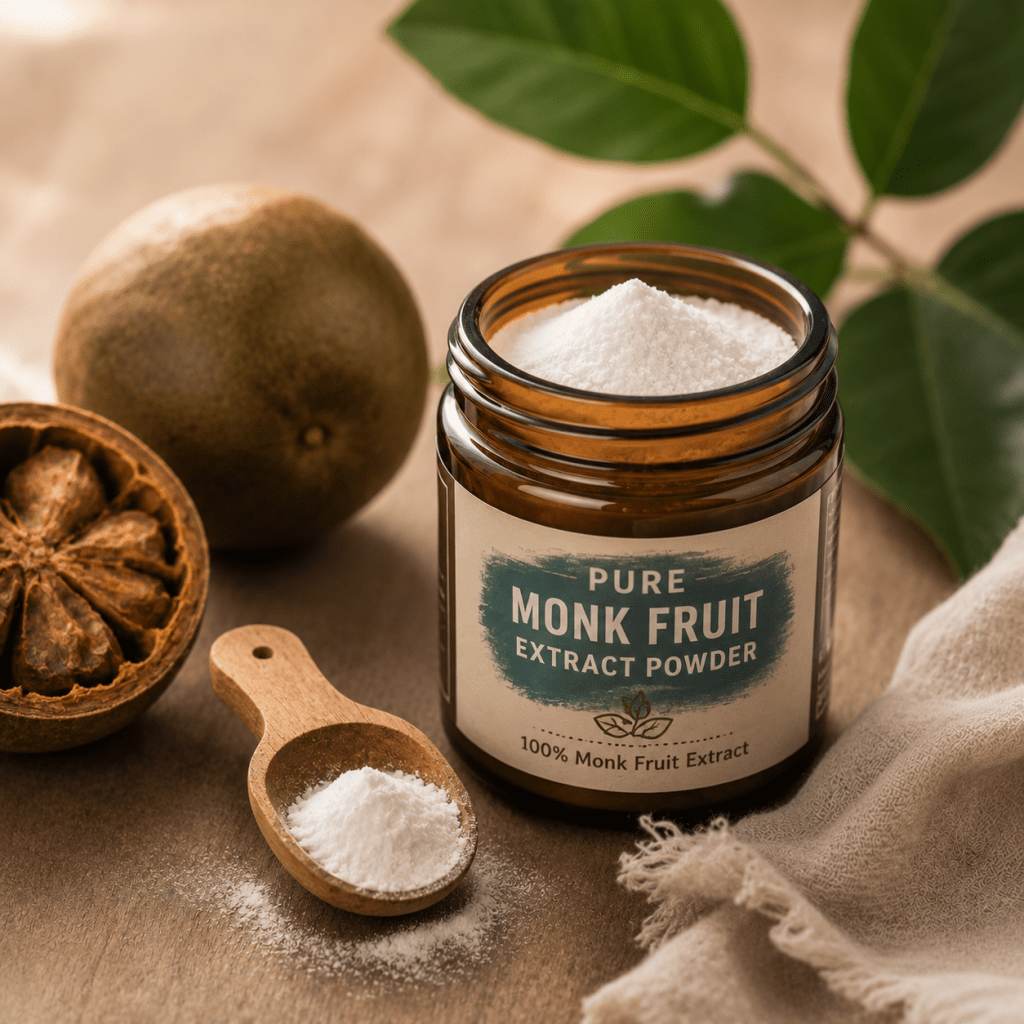
The first brand I purchased was Pure Monk, and it gave me a good understanding of how concentrated monk fruit behaves in recipes. Since then I’ve used several brands, both powdered extracts and liquid extracts.
What I’ve learned is that I personally prefer pure monk fruit extract rather than products diluted with erythritol or other fillers.
It has become my everyday sweetener.
Coffee.
Tea.
Lemonade.
Baking.
Desserts.
Almost everything.
Since only tiny amounts are needed, one small container lasts an incredibly long time.
Affiliate Disclosure—Content Notice—Legal Disclosures—Newsletter—Home—Bottom of Post—top

The Moment I Knew It Would Stay
The biggest confirmation wasn’t actually in the recipes.
It was how I felt…Once the stevia was gone, I felt like myself again.
But there was another small moment that made me realize monk fruit wasn’t just a temporary substitute.
My husband liked it.
He has never enjoyed the taste of stevia. Monk fruit didn’t create the same reaction for him. Finding something we both enjoyed made it feel less like a compromise and more like something our kitchen could build around long-term.
That mattered.
Affiliate Disclosure—Content Notice—Legal Disclosures—Newsletter—Home—Bottom of Post—top
The Weekly Baking Promise That Changed Everything
Oddly enough, the biggest lessons I’ve learned about sweeteners didn’t come from nutrition.
They came from birthdays.
When we first became gluten free, I barely baked.
For several years, gluten-free baking felt frustrating. Ingredients were expensive, recipes were inconsistent, and I rarely felt confident enough to make desserts for our family.
Then, when my fifth child was about to turn five, I realized something that caught me completely off guard.
My children didn’t associate birthdays with birthday cake.
Not because we didn’t celebrate. Because I wasn’t baking.
Living in rural Montana, gluten-free bakery cakes simply weren’t an option, and I had quietly stopped trying.
That realization broke my heart.
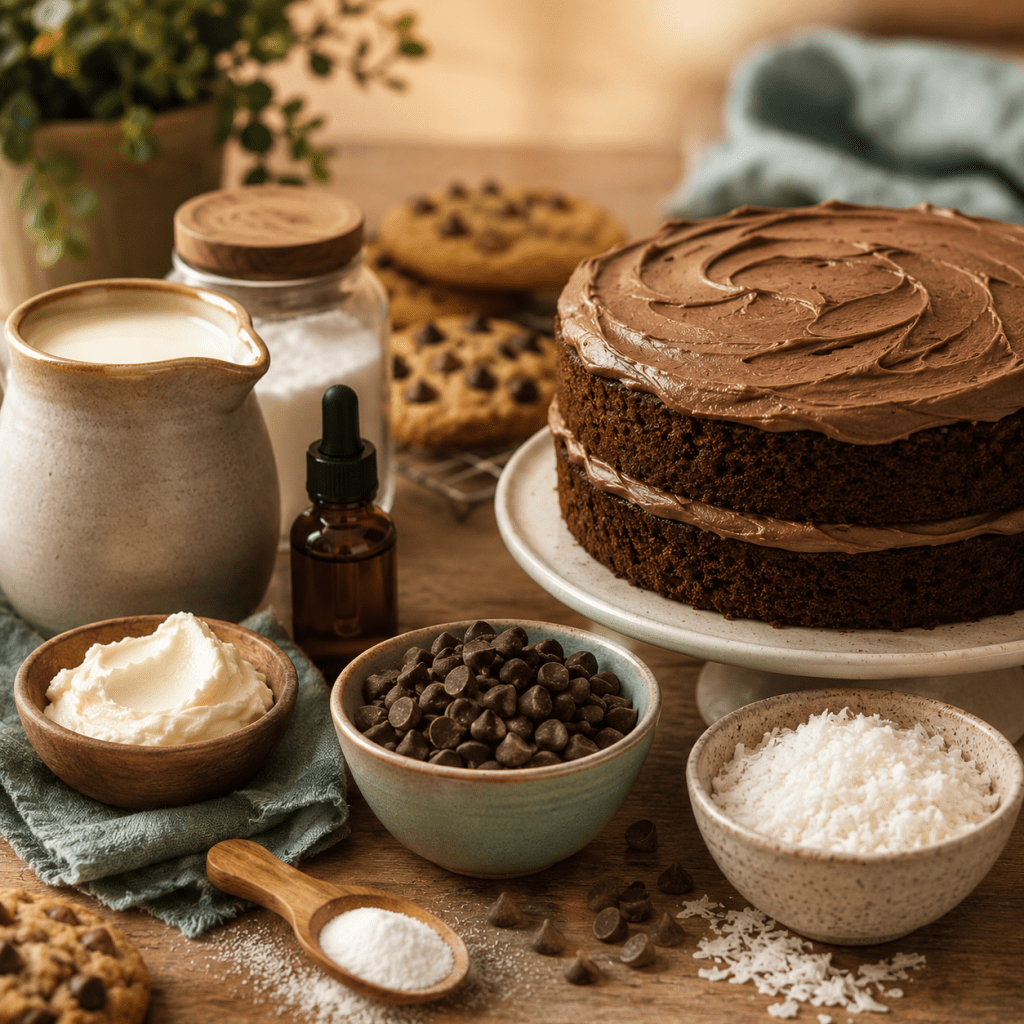
So I made a promise to myself. Every week I would bake something.
Not because every recipe needed to be beautiful. The cakes aren’t always pretty, but we’re reminding ourselves why we LIVE this way.
And as my kids often hear me say: “Ugly food tastes better.”
Affiliate Disclosure—Content Notice—Legal Disclosures—Newsletter—Home—Bottom of Post—top
What Gluten-Free Baking Taught Me About Sweeteners
Years of baking taught me something I wasn’t expecting.
You’ll often hear that sugar provides “bulk” in baked goods.
My experience has been more nuanced.
As I reduced large amounts of granulated sweeteners and relied more heavily on concentrated extracts, I noticed many of my baked goods became lighter and less likely to develop moisture or condensation beneath the crust, or when stored(if they got that far in a family my size).
I wasn’t changing my flour blends.
I wasn’t sifting anything…I don’t even if it says to in the directions.
I wasn’t changing my eggs, though a duck egg lends something special, or hydration.
The biggest change was simply reducing the amount of granulated sweetener.
That doesn’t prove granulated sugar, or sweeteners, never contribute to structure. Food science is wonderfully complex, and different recipes rely on ingredients in different ways. You never knew you were a scientist, did ya?
But it did teach me something valuable:
Kitchen “rules” are often more flexible than we assume.
And, if you research into traditional granulated sugar my experience makes more sense because it actually behaves like a liquid measurement once it is baked. It melts into the mixture at baking temperatures.
Sometimes experimenting teaches us more than repeating what we’ve always heard.
The One Exception: Frosting
There is one place where I happily keep using a granulated sweetener…Frosting.
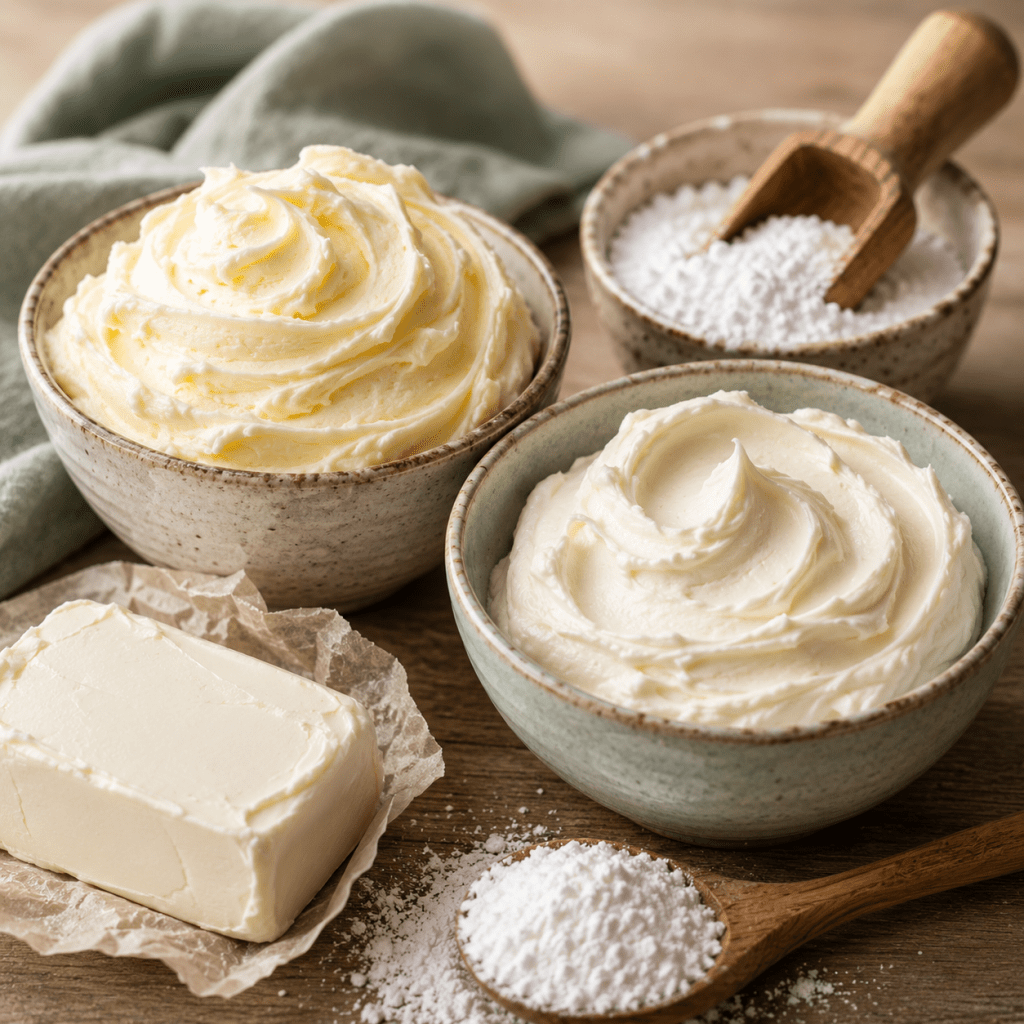
Buttercream and cream cheese style frosting simply need the volume of a powdered sweetener. When I tried making frosting with extract powder alone, I ended up with sweet liquid, or a small amount of a mixture that wouldn’t go across a whole cake—definitely not a frosting.
So this is where powdered granulated sweetener earns its place in my pantry.
My usual starting point is:
1 cup powdered erythritol (I powder it myself in a blender like this, but this one will work too)
¼–½ teaspoon pure monk fruit extract
From there I adjust to taste. I find my measurements to mimic typical powdered sugar in a cup-for-cup sweetness level.
Chocolate frostings and treats nearly always need a little more sweetness because Cocoa Powder and Cacao Powder naturally dull sweet flavors…taste it, always.
My Full Powdered Sweetener Instructions
Prepared Powdered Sweeteners
Lakanto Classic Monk Fruit Sweetener With Allulose
Lakanto Powdered Monk Fruit Sweetener With Erythritol
Powdered Allulose & Monk Fruit Sweetener Blend
Anthony’s Confectioner’s Erythritol Powder
Vitamatic Xylitol Pure Powder
If you make a purchase through any of these links, as an Amazon Influencer, I may receive a small commission at no additional cost to you.
Affiliate Disclosure—Content Notice—Legal Disclosures—Newsletter—Home—Bottom of Post—top
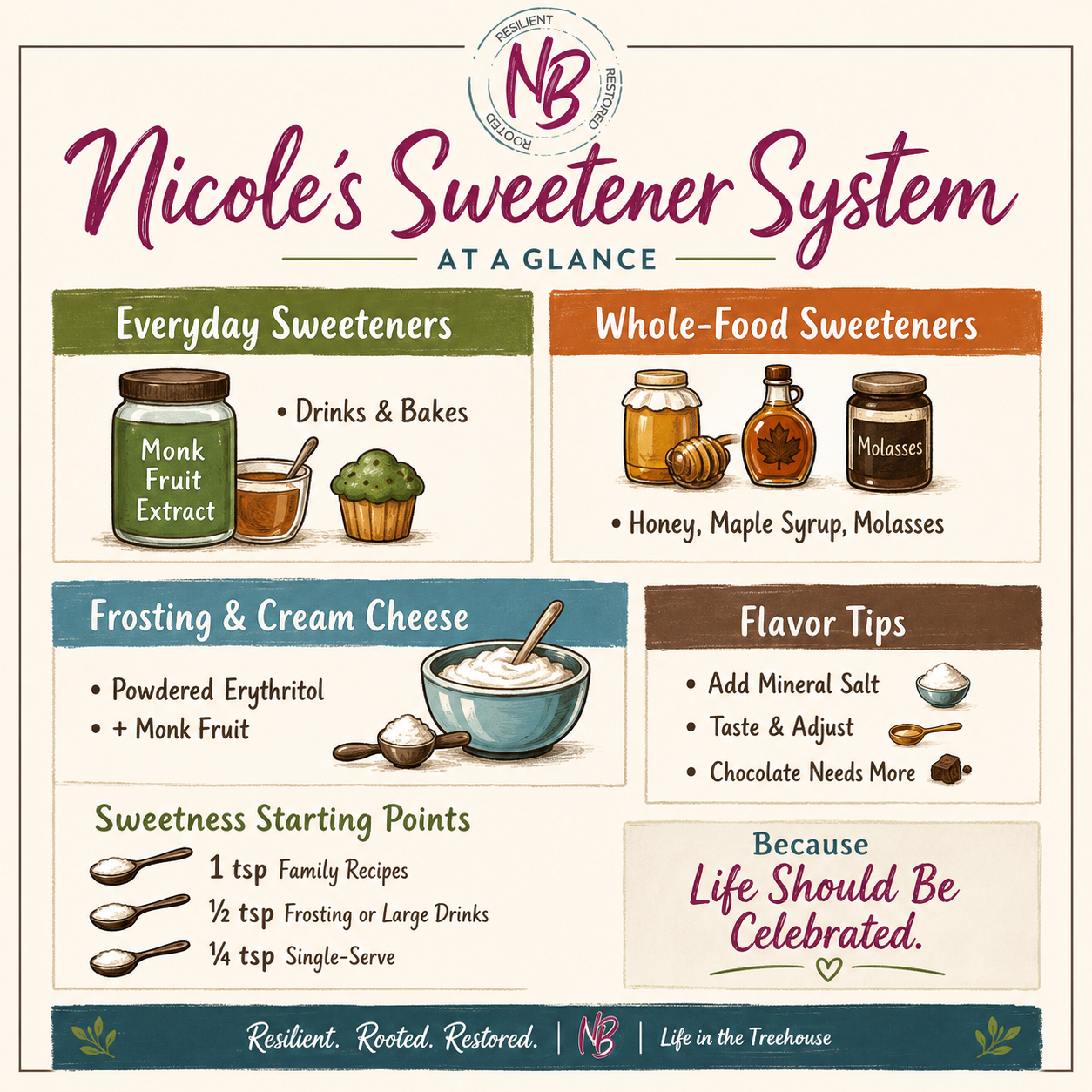
I don’t calculate sweetness with strict formulas anymore.
I build it gradually, by starting with small amounts and adjusting until I love it.
How I Sweeten Recipes Today
These are simply the starting points I reach for.
Family recipes (6–8 servings)
About 1 teaspoon of pure monk fruit extract powder
One gallon drinks
About ½ teaspoon of monk fruit extract powder
Single serving drinks
About ¼ teaspoon of monk fruit extract powder
From there I taste. Adjust. Taste again.
One thing years of cooking has taught me is that sweetness isn’t just about sweetener.
A pinch of mineral salt often makes flavors taste fuller and sweeter without adding more sweetener at all.
And many baked goods actually taste sweeter the next day once the flavors have settled. Although in our house…Leftovers rarely survive long enough to test that theory, but I always bake with room to serve my ten plus a few more.
More Than Ingredients
People often ask me which sweetener is “best.” I don’t think that’s quite the right question.
The better question is:
What helps your home thrive?
For our family, monk fruit has become part of a much larger rhythm.
It’s part of birthday cakes.
Weekly baking.
Summer drinks.
Conversations around the kitchen island.
The goal has never been to eliminate sweetness from our lives.
The goal has been to build a kitchen where celebration and stewardship can live together within our food boundaries.
One where recipes stay flexible.
One where food supports our bodies.
One where birthdays still come with cake and favorite treats.
Even if it’s presentation could best be described as “nailed it.” and we eat it with our eyes closed. Especially then…
Here are links to brands I have personally bought over the years. I only included the ones that were good enough to buy again, and again. I generally browse them all and get the ones that are the lowest cost per ounce when I need them.
If you make a purchase through any of these links, as an Amazon Influencer, I may receive a small commission at no additional cost to you.
Pure Monk Fruit Extract Powders
Tejonva – 5 Ounces
Tejonva – 1 Pound
Teakihut – 4 Ounces
Purisure – 4.4 Ounces
Organic Monk Fruit Extract Powder, 3.5 Ounces
100% Monk Fruit Extract – 1.5 Ounces
NAMANNA Pure Monk Fruit Sweetener – 2.82 Ounces
Monk Fruit Liquid, Portable Extract Powders and Packets for my Car, and WOE Bag
Lakanto Pure Powder
Lakanto Pure Liquid
NOW Foods Liquid
Lakanto Monkfruit Blend Packets
Pyure Monk Fruit Blend Packets
Truvia Monk Fruit Blend Packets
Splenda Pure Monk Fruit Liquid (usually found in coffee & tea aisle at Walmart too)
Affiliate Disclosure—Content Notice—Legal Disclosures—Newsletter—Home—Bottom of Post—top
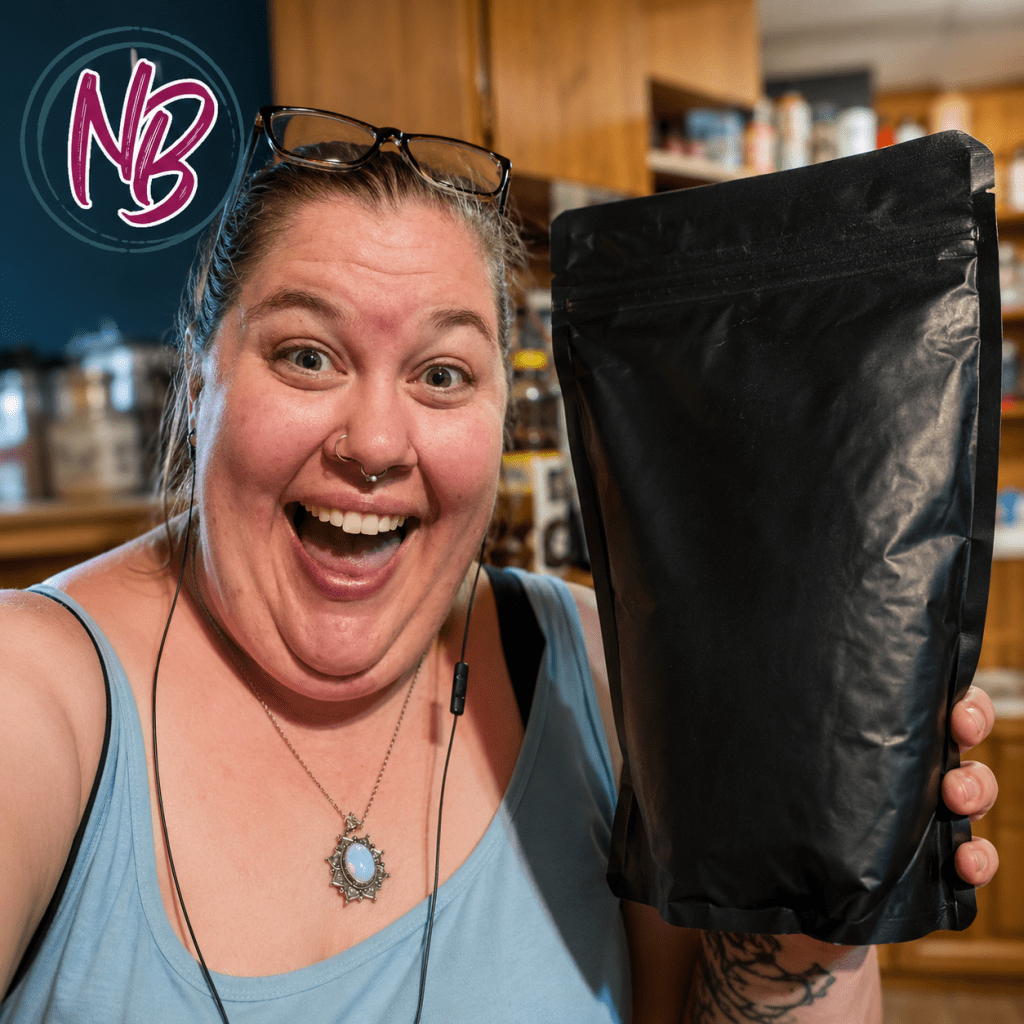
Nicole’s Kitchen Notes
This post shares my personal experience and the practices that have worked well in my own kitchen. It isn’t medical advice or a recommendation that everyone should use the same sweeteners I do. Every body is different. If you notice symptoms after eating a particular ingredient, talk with your healthcare provider and consider carefully observing your own patterns.
There are lots of chats throughout the gluten free baking world that start with, “I don’t want to waste anymore ingredients…” And, I want to give you a different perspective.
The ingredients you don’t use, are not lasting you longer. They are actually just walking their way to a trash can every day they sit in your pantry if you don’t eat them.
The treats you can’t eat because they don’t suit your tastes are not saving you more sweetener or dollars. Adjust to YOUR taste.
The things you don’t make or bake because you are afraid of how they will look, are not more visually pleasing because someone else made them. They look more refined because someone made them “ugly” enough times to gain more wisdom about their ingredients’ behavior, and structure.
The best kitchen is rarely the one that follows someone else’s rules perfectly.
It’s the one that learns to pay attention, gets brave enough to be a beginner for however long it takes, and discovers their family’s own “sweet spot.” Because after coaching countless women who told me they “just don’t crave sweets,” I’ve discovered something different. Most of the time, they hadn’t actually lost their desire for treats. They simply hadn’t given themselves permission to adjust recipes until those treats genuinely fit their own tastes.
Safe, not sorry. Always.
I don’t ask you to trust my ingredient interpretation—not even my own family does. Read the label. Verify the source. Make the decision that best supports your home.
Affiliate Disclosure — Content Notice — Legal Disclosures — Newsletter — Home —TOP



Nicole Burch, is a Trim Healthy Lifestyle Coach, author, and holistic family life mentor helping women and families rebuild through rooted rhythms, personal governance, and sustainable living. Blending nourishment, discernment, and restoration, she guides others toward resilience, peace, and healing—creating lives that are grounded, aligned, and nurtured at home.
Wellness That Withstands.
Rooted. Resilient. Restored.
Affiliate Disclosure — Content Notice — Legal Disclosures — Newsletter — Home —TOP
Trim Healthy Coach Disclaimer
Nicole Burch is a Certified Trim Healthy Mama Lifestyle Coach, independently offering services based on the THM plan. This coach is not an employee or agent of Trim Healthy Mama, LLC. Coaching services are independently managed, and THM is not responsible for results, business practices, or claims made by this coach.
Affiliate Disclosures
As an Amazon Associate, I may link to specific products that I believe in and trust. This is an affiliate link, and I may receive a small commission at no additional cost to you.
As a Trim Healthy Affiliate I may link to specific products that I believe in and trust from Trim Healthy Mama, LLC. If you make any purchases through my link I may receive a small commission at no additional cost to you.
As a Queen of Thrones Affiliate I may link to specific products that I believe in. If you make any purchases through my link I may receive a small commission at no additional cost to you.








Leave a Reply