
Affiliate Disclosure — Content Notice — Legal Disclosures — Newsletter — Home — Bottom of Post
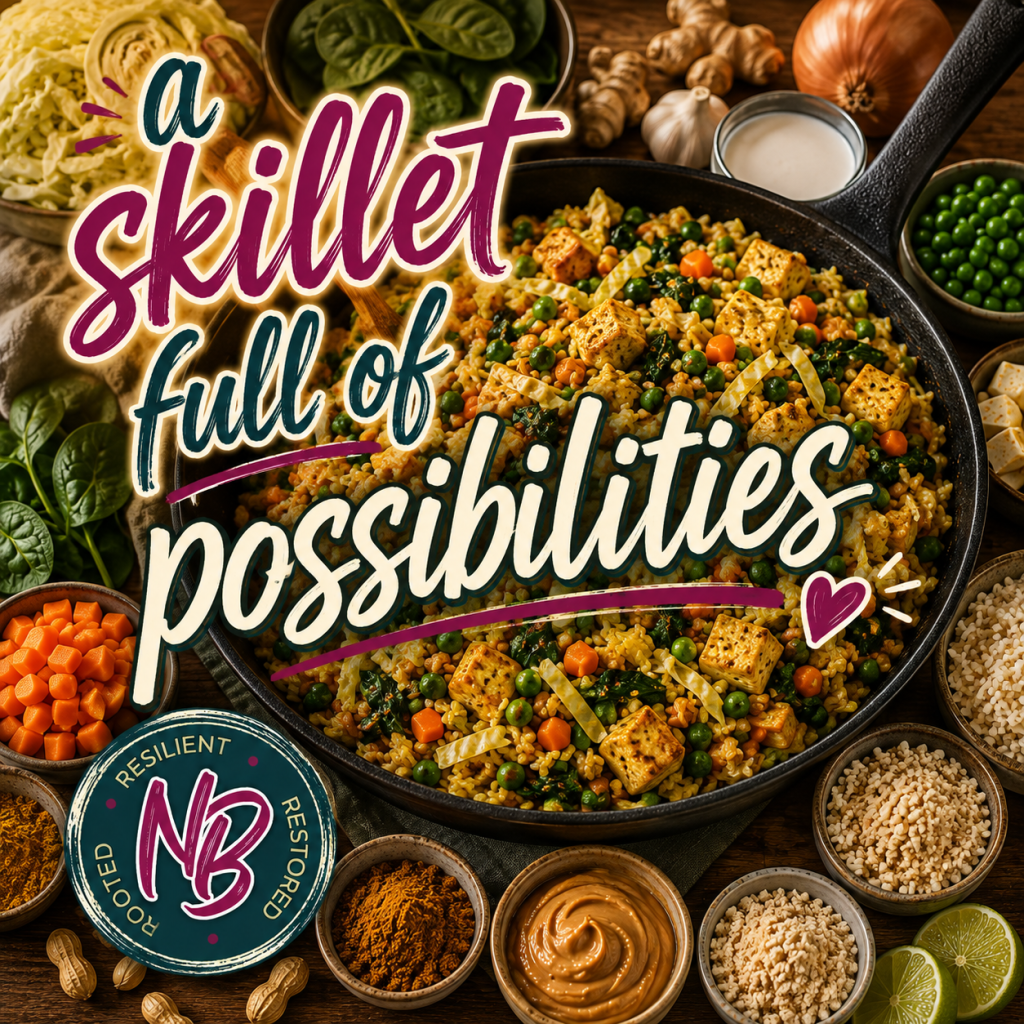
A Creamy, Flexible, Produce-Forward Skillet Full of Possibilities
Cabbage Rice was never meant to convince anyone that cabbage is rice.
It isn’t.
I love cabbage far too much to make it spend its life impersonating something else, and I don’t hide veggies from my people.
What it can do is stretch a meal, carry an enormous amount of flavor, put more vegetables on our plates, and create a foundation that can move with whatever ingredients—and whatever fuel—I want to build around it.
And once you understand that purpose, the possibilities get really fun.
This Coconut Curry Cabbage Rice takes my basic Cabbage Rice method in a completely different direction with onion, garlic, ginger, greens, coconut milk, and either my homemade Curry Powder or Garam Masala.
Then you choose your protein.
Then you choose your protein.
Add some actual rice—or don’t.
Add peanut—or don’t.
Make it creamy and rich or keep it lighter.
Because this isn’t cabbage pretending to be rice.
It’s cabbage understanding its assignment.
And possibilities identify purpose in my kitchen.
You’ll occasionally find affiliate links throughout Life in the Treehouse. If something has become a trusted part of our home, I may share it here. Purchasing through those links costs you nothing extra, but helps support our family and the work I love creating.
Affiliate Disclosure — Content Notice — Legal Disclosures — Newsletter — Home — Bottom of Post—TOP

Start With the Flavor
One of my favorite things about keeping homemade seasoning blends in my Kitchen Apothecary is being able to completely change the direction of familiar ingredients without completely changing the meal.
Cabbage is inexpensive, accessible, and pretty happy to become whatever you season it to become.
For this version, you can use either my Curry Powder or Garam Masala.
They aren’t interchangeable in flavor, and that’s precisely why I like giving you the choice.
Curry Powder gives this dish that familiar warm, golden curry direction.
Garam Masala brings a deeper, fragrant warmth.
Use whichever sounds good…use another warm flavor enhancing blend that you already love.
Or make this often enough to discover which version your family claims as theirs. Make it your own.
Affiliate Disclosure — Content Notice — Legal Disclosures — Newsletter — Home — Bottom of Post—TOP
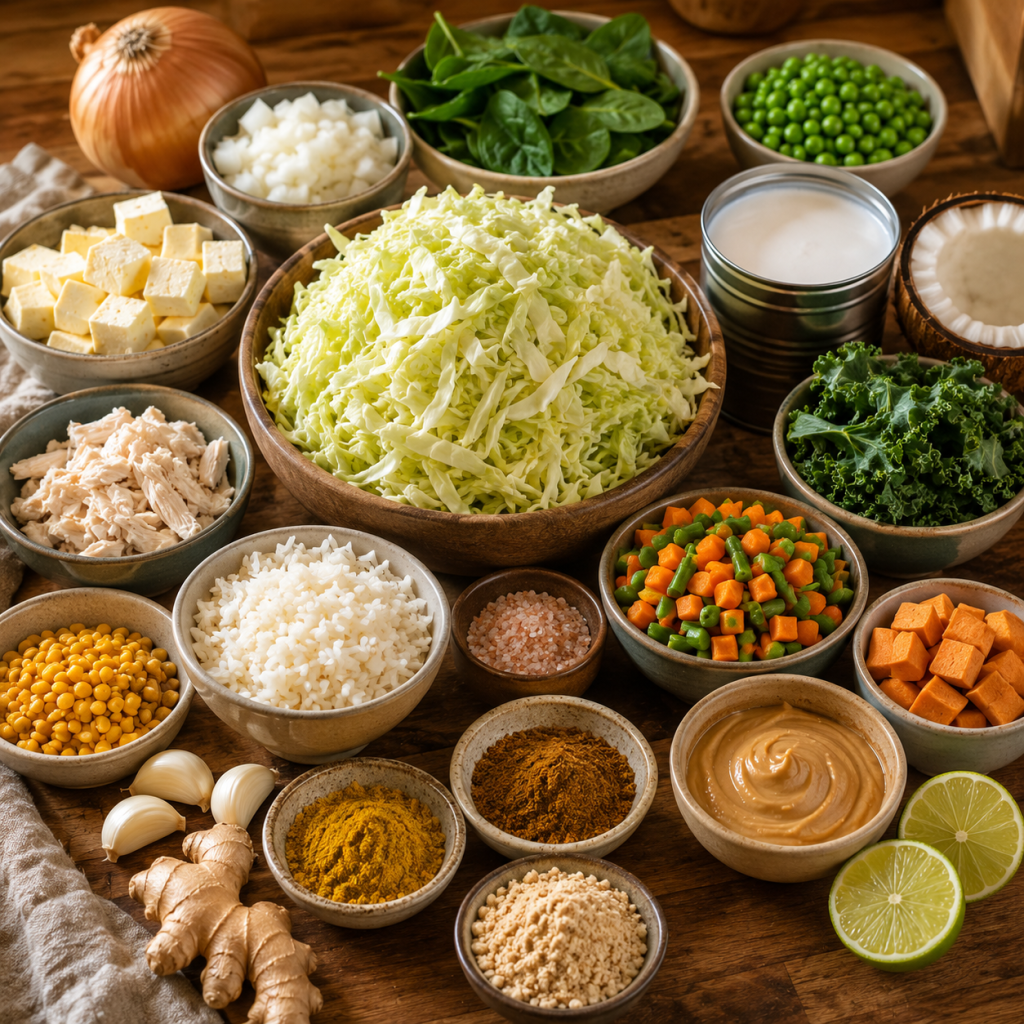
Coconut Curry Cabbage Rice
Fuel Flow: Flexible Serves: Multiple
Ingredients:
1 large onion, diced or 1 Tablespoon granulated, minced, onion.
Fresh Minced Garlic or Dried, to taste
Fresh or ground ginger, to taste
1–2 tablespoons Curry Powder OR Garam Masala, to taste
1 large head cabbage, finely chopped or shredded…go ahead and grab bagged.
4–6 cups spinach or kale
1–2 cups peas or another vegetable
½–1½ cups cooked rice, optional
½–1 cup lite or full-fat coconut milk
Salt, to taste
1–2 tablespoons peanut butter(Almond or Seed Butter) or 2–4 tablespoons peanut powder(Barney Butter), optional
Squeeze of lime or lemon, or another little splash of an acidic element, optional
Choose a Protein
Paneer
Cooked chicken
Chana Dal
Moong Dal
Another cooked Dal, which is a lentil-like legume
I particularly like paneer when I want this version to feel a little more special.
But don’t turn finding paneer into an obstacle between you and dinner.
Can’t find it? Use chicken, use dal, or leave the cheese out rather than worrying about finding a perfect substitute.
Possible is the goal here.
Choose Your Vegetables
Peas are probably my easiest default.
They’re sweet, colorful, inexpensive, freezer-friendly, and require approximately zero But they’re certainly not your only option.
Try:
Cauliflower
Green beans
Carrots
Zucchini
Bell peppers
Broccoli
Diced sweet potato
…Or open the vegetable drawer and see what is currently campaigning not to become compost.
This is an excellent use-what-needs-using meal.
Some vegetables will need a little longer to cook than others, so add sturdy vegetables such as carrots, green beans, broccoli, cauliflower, or sweet potatoes earlier. Spinach or kale gets folded in toward the end so it can wilt into everything without disappearing completely.
Affiliate Disclosure — Content Notice — Legal Disclosures — Newsletter — Home — Bottom of Post—TOP
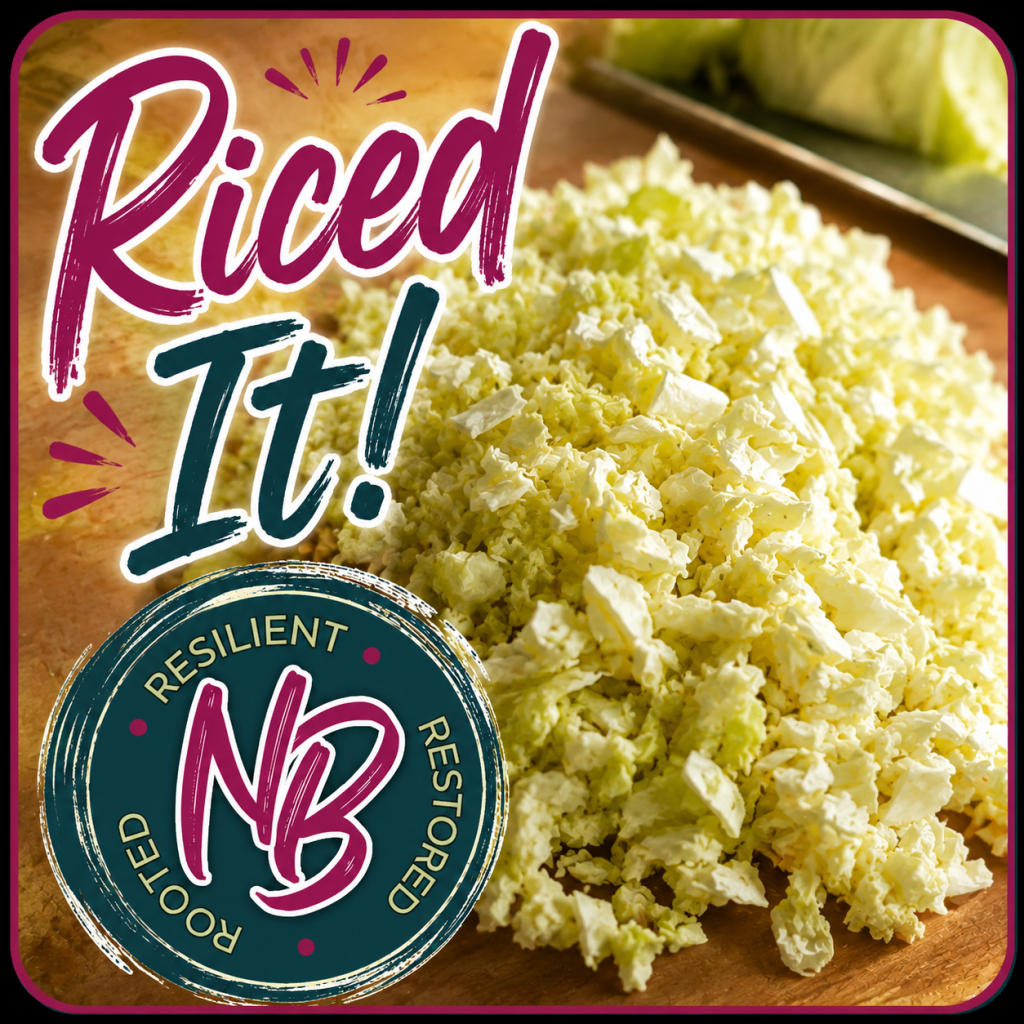
The Cabbage Rice Method
Start by preparing your cabbage. Finely chop or shred it so the pieces are small enough to become the foundation of the skillet rather than big pieces of sautéed cabbage. Think “Kentucky Fried Coleslaw” size…riced it!
Heat a large skillet or pot and cook the diced onion until it begins to soften.
Add garlic and ginger, followed by 1 tablespoon of Curry Powder or Garam Masala.
Let those spices warm briefly with the aromatics before adding the cabbage.
Add your chopped cabbage and begin cooking it down.
Cabbage releases quite a bit of moisture as it cooks, so don’t get impatient and start pouring liquid into the pan too quickly. Give it time to soften and reduce.
Add any sturdy vegetables(they usually crunch when you eat or cut into them) you’re using as needed so they have enough time to cook.
Once the cabbage is tender, add your cooked protein, peas or quicker-cooking vegetables, and spinach or kale.
Then it’s time to make everything creamy.
Peanut Is a Possibility, Not a Requirement
I love peanut with coconut, curry spices, and greens.
But I deliberately don’t make it foundational to this recipe. If you want it, add it.
For a richer version, stir in 1–2 tablespoons peanut butter.
For peanut flavor with less added fat, use 2–4 tablespoons peanut powder. You may need a splash of additional liquid after adding peanut powder because it will absorb some of the moisture.
And if peanut doesn’t belong in your version? Leave it out.
That’s the difference between understanding an ingredient’s purpose and believing every ingredient is a rule.
Yes, You Can Add Actual Rice
Please do, if that’s what you want.
Cabbage Rice doesn’t have to mean:
Cabbage instead of rice.
It can also mean:
Cabbage AND rice.
That might actually be one of my favorite ways to use this recipe.
A large head of cabbage creates an enormous amount of vegetable volume. Then ½–1½ cups of cooked rice distributed throughout the whole skillet gives you the familiar texture and satisfaction of rice without requiring rice to provide the entire foundation of the meal.
We’re not trying to prove that we can live without something. We’re asking what each ingredient can contribute.
Sometimes cabbage takes the lead.
Sometimes rice joins it.
Affiliate Disclosure — Content Notice — Legal Disclosures — Newsletter — Home — Bottom of Post—TOP

Trim Healthy + Fuel Flow Notes
This is exactly the kind of recipe I love for both the Trim Healthy framework and Fuel Flow because it isn’t locked into one fuel.
The ingredients you choose determine what you build.
Stir it through the cabbage and give everything a minute to come together.
Fat-Forward | Trim Healthy Satisyfing(S) Direction
Build your skillet around:
Cabbage + greens + paneer or chicken + full-fat coconut milk + peanut butter, with little or no added rice.
You get the richness from the coconut, peanut, and/or higher-fat protein while cabbage provides the bulk of the dish.
Carb-Forward | Trim Healthy Energizing Direction
Build around:
Cabbage + rice and/or dal + peas + greens + lean chicken or another lean protein + lite coconut milk + peanut powder.
Now the carbohydrate-containing whole foods are doing more of the fueling while added fats stay lighter.
Dual Fuel | Trim Healthy Crossover Direction
Bring the two together.
Rice or dal + paneer or a higher-fat protein + full-fat coconut milk and/or peanut butter creates a meal containing meaningful amounts of both fuel sources.
And that isn’t a recipe failure. It’s a different meal.
That’s one of the reasons I want both languages represented in Not By Bread Alone.
Trim Healthy gives us an established framework for understanding S, E, FP, and Crossover meals.
Fuel Flow lets me talk about those same food individual ingredient choices as Fat-Forward, Carb-Forward, Neutral Fuel, and Dual Fuel while keeping the emphasis on recognizing what we’ve actually built.
The goal isn’t to force this recipe into one fuel designation. The goal is to know how to move it with intention.
Affiliate Disclosure — Content Notice — Legal Disclosures — Newsletter — Home — Bottom of Post—TOP
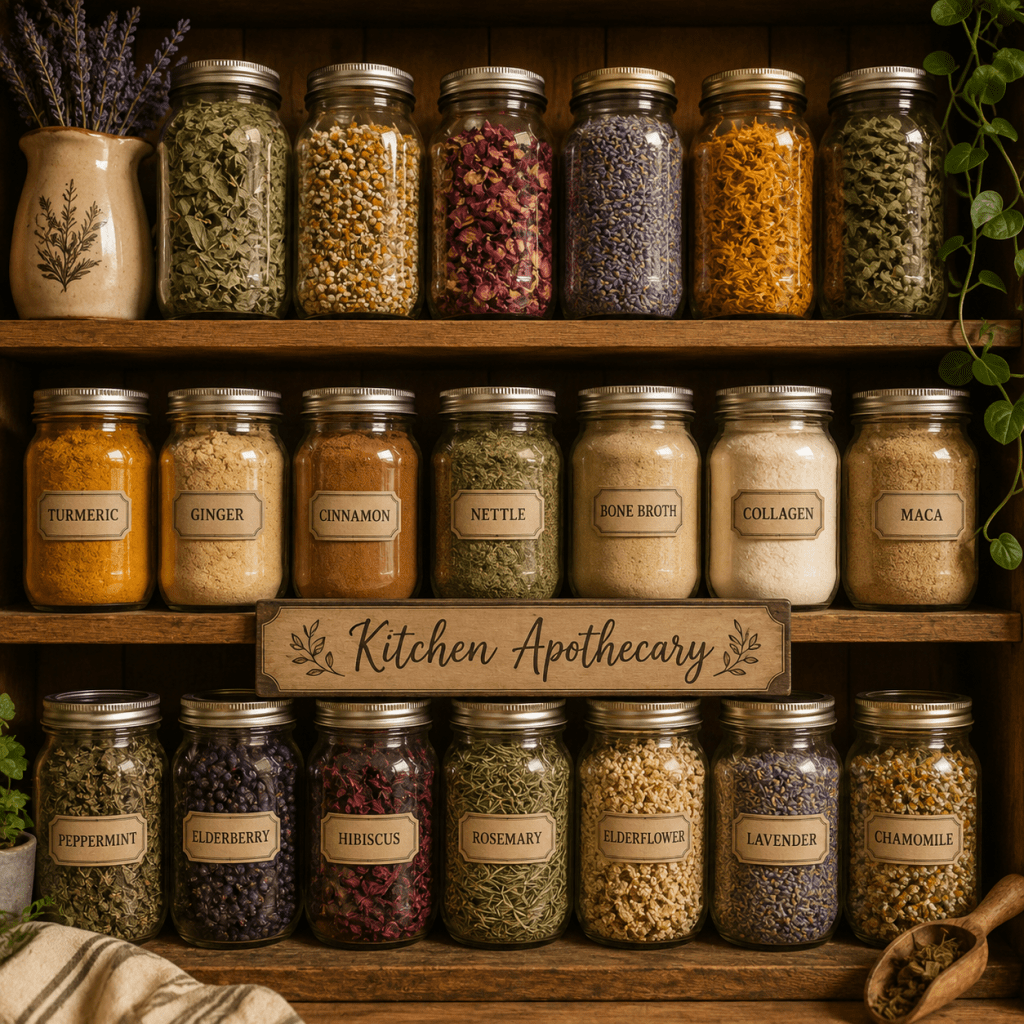
A Kitchen Apothecary Kind of Dinner
This recipe is also a perfect example of why my Kitchen Apothecary isn’t limited to herbs and tea.
My Curry Powder and Garam Masala live there. So do the spices that make them.
Coconut milk lives in my pantry.
Peanut powder has a purpose.
Rice has a purpose.
Dal has a purpose.
Frozen peas have a purpose.
Cabbage has about seventeen purposes before breakfast.
When you begin looking at ingredients, and whole foods according to what they can do for your body or a meal, rather than the single recipe you originally bought them for, the kitchen starts becoming much more flexible.
And, because I believe that everyone should be Safe, Not Sorry, I want you to be very aware of the ingredients before you trust my linked ones. That’s the Treehouse Standard.
Faster Food: Make the Shortcuts Count
This can be an extremely practical dinner.
Use bagged shredded cabbage if that’s what gets dinner made.
Use frozen or canned peas.
Use prewashed, canned or frozen spinach…my family prefers kale in its place, cooked.
Use cooked chicken, or other protein not listed because you can, from another meal.
None of those choices make the meal less homemade.
They make homemade food more available when your capacity is not unlimited.
And if you make a giant skillet?
Good. I happen to think intended and reimagined leftovers are one of the finest kitchen hacks ever invented.
One Last Treehouse Tip…
Don’t add everything just because everything is possible. That’s an important part of possibility, too.
Possibility isn’t an ingredient checklist.
It’s permission to look at what you have, what your body needs, what sounds good, and what amount of effort you actually have available today.
Affiliate Disclosure — Content Notice — Legal Disclosures — Newsletter — Home —TOP



Nicole Burch is a Trim Healthy Lifestyle Coach, author, and holistic family life mentor helping women and families rebuild through rooted rhythms, personal governance, and sustainable living. Blending nourishment, discernment, and restoration, she guides others toward resilience, peace, and healing—creating lives that are grounded, aligned, and nurtured at home.
Wellness That Withstands.
Rooted. Resilient. Restored.
Affiliate Disclosure — Content Notice — Legal Disclosures — Newsletter — Home —TOP


Trim Healthy Coach Disclaimer
Nicole Burch is a Certified Trim Healthy Mama Lifestyle Coach, independently offering services based on the THM plan. This coach is not an employee or agent of Trim Healthy Mama, LLC. Coaching services are independently managed, and THM is not responsible for results, business practices, or claims made by this coach.
Affiliate Disclosures
As an Amazon Associate, I may link to specific products that I believe in and trust. This is an affiliate link, and I may receive a small commission at no additional cost to you.
As a Trim Healthy Affiliate I may link to specific products that I believe in and trust from Trim Healthy Mama, LLC. If you make any purchases through my link I may receive a small commission at no additional cost to you
As a Queen of Thrones Affiliate I may link to specific products that I believe in. If you make any purchases through my link I may receive a small commission at no additional cost to you.
River Hills Harvest and Azure Standard referral links may be linked to specific products or images on this blog. If you make any purchases through my link I may receive a small commission at no additional cost to you.










Leave a Reply