
Affiliate Disclosure — Content Notice — Legal Disclosures — Newsletter — Home — Bottom of Post
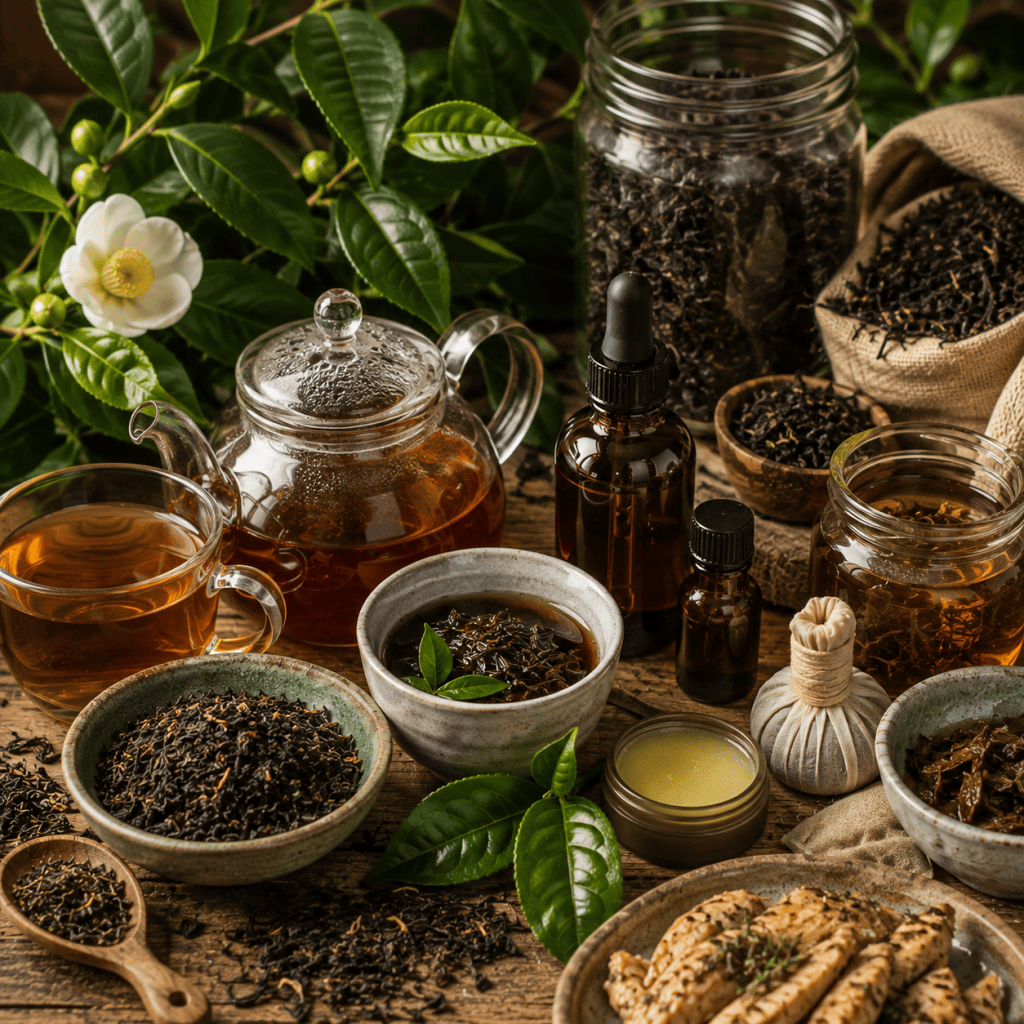
So let’s start with black tea
If I told you we were going to build an herbal apothecary and the first thing you needed to do was buy an herb you’d never heard of, we’d already be heading in the wrong direction.
An apothecary isn’t defined by the number of jars on the shelf.
It’s built through knowledge. So let’s start with Black Tea.
Yes. Tea.
The box of tea bags you may already have shoved into a cupboard absolutely counts.
One herb—even black tea—can be an apothecary if it’s something you understand and actually use.
You’ll occasionally find affiliate links throughout Life in the Treehouse. If something has become a trusted part of our home, I may share it here. Purchasing through those links costs you nothing extra, but helps support our family and the work I love creating.
Meet the Plant
Black tea comes from Camellia sinensis.
And here’s one of my favorite pieces of tea trivia:
Black tea
Green tea
White tea
Oolong…Trim Healthy Mamas know this one.
They’re not necessarily different tea plants.
They’re different preparations of the same species.
What changes is how the leaves are harvested and processed—particularly how much oxidation they’re allowed to undergo.
Black tea is highly oxidized, which contributes to its darker color, stronger flavor, and characteristic aroma.
So before we’ve done anything particularly “herbal,” we’ve already learned something useful:
The way we prepare a plant can substantially change what we experience from it.
That’s going to matter over and over again as we explore the Kitchen Apothecary.
Kitchen Apothecary Profile
Plant: Camellia sinensis
Common Preparation: Black Tea
Primary Treehouse Role: Food & Foundation
Framework Lenses: Regulate • Protect, with foundational learning across the framework
Common Forms: Loose leaf • Tea bags • Brewed tea • Tea blends
Kitchen Uses: Hot tea • Iced tea • Spiced tea • Culinary applications • Pickling & food preservation
Everyday-Care Possibilities: Rinses • Compresses • Baths and other external preparations
Contains Caffeine: Usually, yes
Why It Earned a Place Here: It’s accessible, familiar, versatile, and a perfect reminder that an apothecary begins with understanding—not acquisition.
Affiliate Disclosure — Content Notice — Legal Disclosures — Newsletter — Home — Bottom of Post—TOP
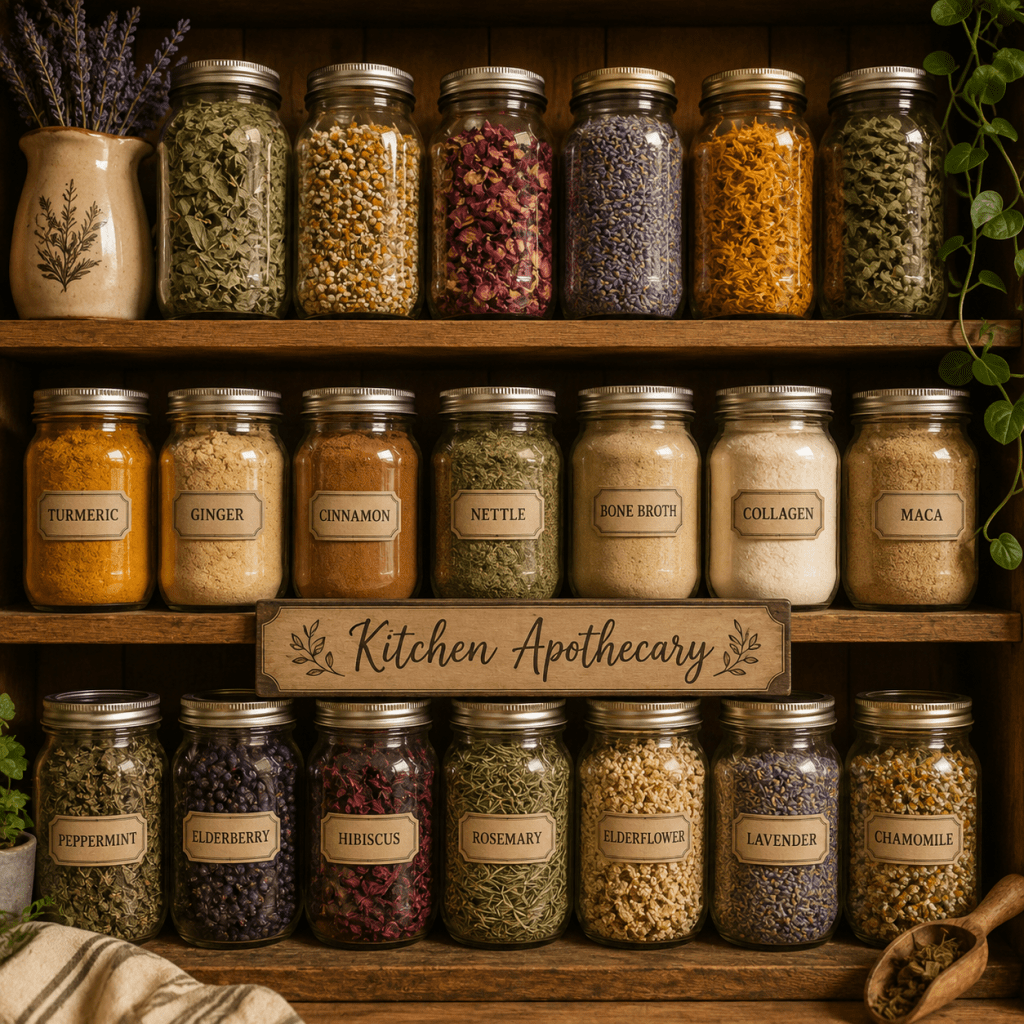
FOOD & FOUNDATION
I’m giving black tea the role Food & Foundation because I want this series grounded in something important:
Herbs are part of food.
They aren’t a separate magical category of things that only become valuable when they’re made into tinctures, capsules, extracts, or remedies.
Black tea is a beverage.
It’s flavor. It’s a thing you make because you enjoy drinking it
It’s nourishment in the broad sense of something we consume.
It’s ritual & culture.
It’s hospitality.
I don’t need to transform every cup of tea into a wellness intervention before I’m allowed to consider it valuable.
What Does Black Tea Bring?
Black tea naturally contains plant compounds called polyphenols, including flavonoids and compounds formed during oxidation such as theaflavins and thearubigins.
It also naturally contains caffeine, although the amount in a particular cup varies with the tea, quantity used, water temperature, and brewing time.
That means black tea isn’t interchangeable with a caffeine-free herbal infusion.
It has its own characteristics.
Its own flavor.
Its own chemistry.
And its own considerations.
But rather than beginning with:
What can black tea fix?
I prefer to start with:
What does black tea bring?
It brings a flavorful brewed beverage. Warmth. Ritual.
Plant compounds worth learning about.
Caffeine that may contribute to alertness.
And a surprisingly versatile ingredient that doesn’t necessarily have to stay inside the teacup.
Affiliate Disclosure — Content Notice — Legal Disclosures — Newsletter — Home — Bottom of Post—TOP

Through the Treehouse Herbal Framework
My herbal framework uses four lenses: Build • Regulate • Protect • Shield
They aren’t medical classifications.
They aren’t promises about what an herb will do.
They’re simply different questions I can use while learning about a plant.
Black tea is a particularly good example of why those categories overlap.
BUILD — Nourish • Replenish • Restore
Black tea isn’t something I’d primarily categorize as a nutritive Build herb in the way I might nettle or oat straw.
But it does establish an important foundation:
Start with something you already consume and learn about it.
REGULATE — Settle • Balance • Support Rhythm
This is where black tea becomes interesting because context matters.
Black tea contains caffeine.
For one person, a morning cup may be part of a pleasant, familiar rhythm.
For another, caffeine may feel like exactly the opposite of settling.
And timing matters.
Quantity matters.
The individual person matters.
That’s precisely why I don’t want my framework to become a list saying:
“This herb does this...”
Instead:
“What do I observe when I use this?“
Does morning tea fit comfortably into my rhythm?
Does afternoon tea interfere with sleep?
Do I enjoy caffeinated tea, or would another preparation serve me better?
PROTECT — Preserve • Tend • Care For
Here’s where tea can leave the mug…
Brewed tea has a long history of use in everyday external preparations, and you’ll find people incorporating tea into things such as rinses, compresses, baths, and skin or hair-care routines.
Protect asks:
How might this plant become part of ordinary tending and care?
It doesn’t need a dramatic claim attached to it. Just, observe. See what fits, and do it.
SHIELD — Prepare • Support • Respond
I don’t need to manufacture a reason to classify black tea as Shield just because I created four categories. Black tea isn’t one of the primary herbs I think of when I use my Shield lens.
An herb doesn’t need to belong strongly in every category.
Part of understanding our tools is knowing what they are—and what they aren’t.
Plants don’t know I made a filing system.
Affiliate Disclosure — Content Notice — Legal Disclosures — Newsletter — Home — Bottom of Post—TOP
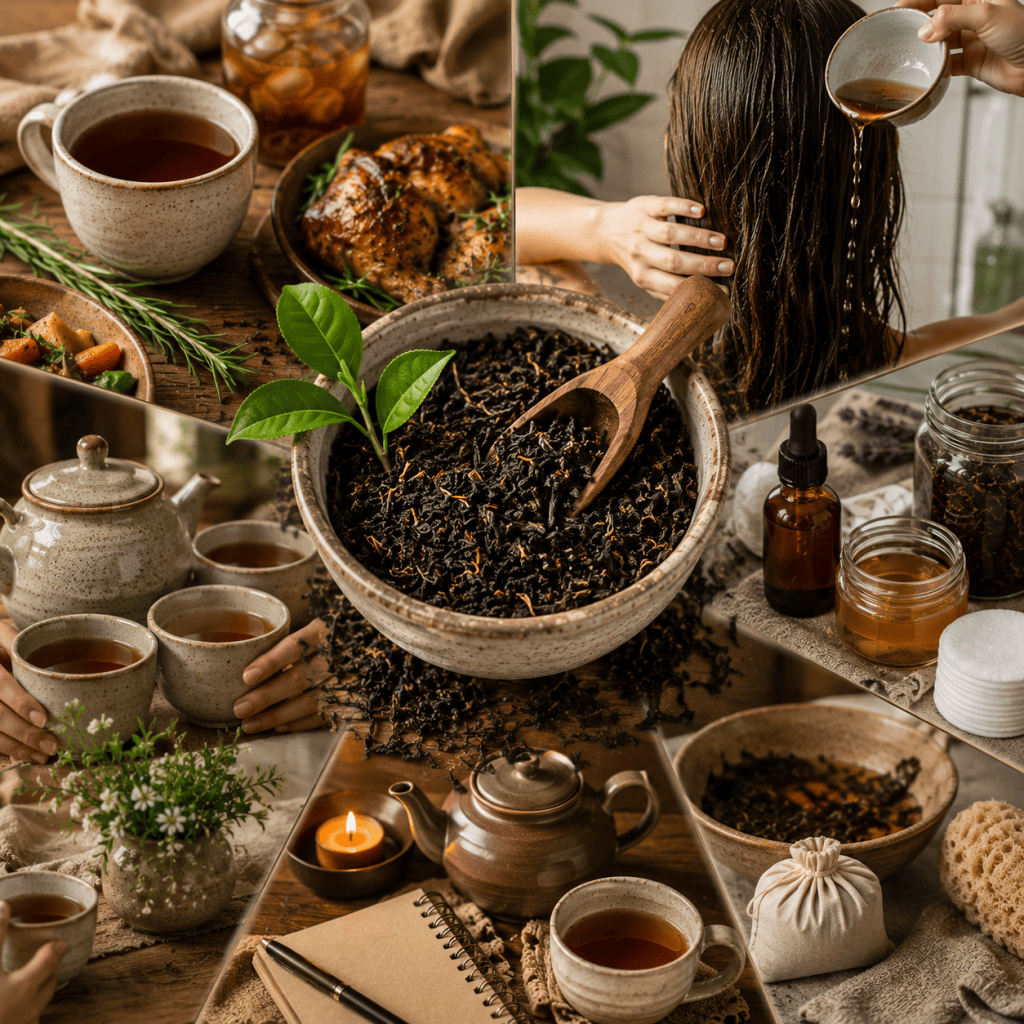
One Ingredient, More Than One Job
This is where black tea earns its Kitchen Apothecary credentials in the Treehouse.
You can drink it hot. Drink it iced.
Blend it with spices. Add citrus. Use it as the base for other tea blends.
Cook with strongly brewed tea in recipes where its tannic, earthy flavor makes sense.
Experiment with cooled tea in external-care preparations and compost spent tea leaves where appropriate…my red wigglers love them.
It also makes its way into my Cantry.
When I’m making homemade brined or water-bath pickles, I add black tea leaves to my jars to help the vegetables hold onto some of that wonderful pickle crunch.
Nothing special.
No separate product to buy.
I literally open a regular black tea bag and pour the leaves in.
Tea leaves contain tannins, which is why they can be useful here. Tannin-rich leaves have a long history of being used in pickle making to help vegetables retain firmness, and black tea gives me an easy option using something I already keep in my kitchen.
The tea doesn’t make the pickles safe.
It just helps them stay pickly. And frankly, nobody wants a floppy pickle.
Multifunctional doesn’t mean you have to use something every possible way.
It means understanding that you have options.
One Jar Is Enough
Someday your Kitchen Apothecary might contain nettle and oat straw.
Tinctures. Infused oils. Homemade salves.
Or three ridiculously full cupboards of herbal elements, like mine.
None of that is required to begin.
If all you have today is a box of black tea, start there.
Not because one herb can do everything.
But because an apothecary was never supposed to be about having everything.
It’s about knowing how to use what you have.
Affiliate Disclosure — Content Notice — Legal Disclosures — Newsletter — Home — Bottom of Post—TOP

Tea Is Also Ritual
There’s another reason black tea belongs here that has very little to do with plant compounds.
Tea has been woven into hospitality and social rituals across cultures for generations.
And in ordinary home life, a cup of tea can simply become a marker in the day. You may make exactly the same cup of tea every morning because that’s how you like it.
“Have something to drink…” “Warm your hands…” “Take this with you…”
Those things aren’t medical outcomes. They’re human ones.
Wellness isn’t the only form of care.
Start With the Tea You Already Own
Before you go shopping for loose-leaf black tea grown on a particular mountainside and harvested beneath the light of a full moon…
Open your cupboard.
What do you already have?
If you already drink it, start there.
What kind of tea is it?
Is it actually black tea? Does it contain other ingredients?
Is it caffeinated or decaffeinated?
How do you like it prepared?
Learn your tea before you buy another tea.
That’s Kitchen Apothecary work too.
A Simple Cup of Black Tea
You don’t need complicated equipment.
Use approximately 1 teaspoon loose black tea per 8 ounces of water, or one tea bag per cup, unless the package recommends otherwise.
Pour hot water over the tea and steep according to the particular tea’s instructions—often somewhere around 3–5 minutes.
Then taste it…Not because there’s a test. Because you’re learning.
Try a shorter steep another time. Try longer.
Notice the bitterness and astringency.
Notice the aroma.
Notice whether you prefer it plain or with something added.
Notice how you feel after drinking it.
Learn one thing about Camellia Sinensis you didn’t know yesterday. Your preferences are useful information too. That’s it.
You have officially done herbalism without reorganizing a room, ordering twelve jars, or developing an entirely new personality.
Affiliate Disclosure — Content Notice — Legal Disclosures — Newsletter — Home — Bottom of Post—TOP

A Few Things Worth Knowing
“Natural” doesn’t mean “irrelevant to the body.”
Black tea contains caffeine unless it has been decaffeinated, and caffeine affects people differently.
Large amounts or tea consumed later in the day may interfere with sleep for some people.
Tea’s tannins and other compounds can also interact with nutrient absorption, particularly iron, which may make timing worth discussing with a qualified healthcare professional for someone managing iron deficiency or other specific nutritional concerns.
Pregnancy, breastfeeding, medications, health conditions, and individual caffeine sensitivity may also change what amount makes sense for someone.
Knowing the potential limitations, or constituents, of something is part of knowing how to use it in your lifestyle or not.
Browse These Posts:
Tea at Our Table
Cooking With Tea: It’s an Ingredient, Too
Black Tea Beyond the Cup
Kombucha Made Simple
Spent Tea: Is There Anything Useful Left to Do With It?
The Treehouse Standard
I share herbs as tools to explore, not prescriptions to follow. I’m not a medical professional or herbalist—just a curious home herbal learner sharing what I use and learn.
Curiosity before correction. Education before dependency.
Learn the plant, know its limitations, and seek qualified guidance when appropriate.
Affiliate Disclosure — Content Notice — Legal Disclosures — Newsletter — Home —TOP



Nicole Burch is a Trim Healthy Lifestyle Coach, author, and holistic family life mentor helping women and families rebuild through rooted rhythms, personal governance, and sustainable living. Blending nourishment, discernment, and restoration, she guides others toward resilience, peace, and healing—creating lives that are grounded, aligned, and nurtured at home.
Wellness That Withstands.
Rooted. Resilient. Restored.
Affiliate Disclosure — Content Notice — Legal Disclosures — Newsletter — Home —TOP
Trim Healthy Coach Disclaimer
Nicole Burch is a Certified Trim Healthy Mama Lifestyle Coach, independently offering services based on the THM plan. This coach is not an employee or agent of Trim Healthy Mama, LLC. Coaching services are independently managed, and THM is not responsible for results, business practices, or claims made by this coach.
Affiliate Disclosures
As an Amazon Associate, I may link to specific products that I believe in and trust. This is an affiliate link, and I may receive a small commission at no additional cost to you.
As a Trim Healthy Affiliate I may link to specific products that I believe in and trust from Trim Healthy Mama, LLC. If you make any purchases through my link I may receive a small commission at no additional cost to you
As a Queen of Thrones Affiliate I may link to specific products that I believe in. If you make any purchases through my link I may receive a small commission at no additional cost to you.
River Hills Harvest and Azure Standard referral links may be linked to specific products or images on this blog. If you make any purchases through my link I may receive a small commission at no additional cost to you.







Leave a Reply