
Affiliate Disclosure — Content Notice — Legal Disclosures — Newsletter — Home — Bottom of Post

There are ingredients in a kitchen that get all the attention
And then there are the forgotten ones.
The liquid left in the bowl. The little bit that doesn’t seem substantial enough to become anything on its own. The thing left behind after you made the thing you actually set out to make.
Whey can easily become one of those ingredients.
When I started making homemade yogurt, I kept ending up with whey.
Lots of whey.
Which eventually led me to a very practical question:
What am I supposed to do with all this whey?
Apparently, my answer was:
Make lemonade.
And Cultured Lemonade became one of those recipes that quietly earned a permanent place in our kitchen.
Affiliate Disclosure: Some of the links in this post are affiliate links. This means I may earn a small commission at no additional cost to you if you choose to make a purchase. I only recommend products I personally use, trust, or believe would genuinely serve my readers. Thank you for supporting Life in the Treehouse!
The Forgotten Ingredient Wasn’t Finished Yet
The whey isn’t necessarily waste.
It’s an ingredient that hasn’t been assigned its next job yet.
That doesn’t mean I believe we have to rescue every scrap of food from the garbage can to prove we’re good stewards. Sometimes something has met its destiny, and that’s okay. But I love discovering that an ingredient I already have can serve another meaningful purpose.
Whey can be used in baking or marinades. I use it as the acidic addition when I soak dried beans. And, obviously, I make lemonade with it.
Affiliate Disclosure — Content Notice — Legal Disclosures — Newsletter — Home — Bottom of Post—TOP

click the Pic to see where I worked
Apparently There’s a Soda Jerk in Me
I have to admit that I have a thing for quirky drinks.
Cultured Lemonade
Tea Phosphate
Butterfly pea flowers turning a drink from blue to purple when the lemon hits.
Kombucha bubbling away.
Ginger bugs becoming homemade soda.
Milk Kefir & Water Kefir
There’s something delightful about a drink that makes you stop and pay attention, not just visually, but in how to make it yourself.
That’s one of my favorite things about learning how food works. I’ve been interested in fermentation for years. Not just drinks, but dairy, veggies, and longer projects like gluten free Miso.
Fermentation ingredients aren’t always just in there...
They have jobs. They add flavors and fizzy sensations. They make those microbes hap-hap-happy.
And this jar of lemonade has a whole microbial story happening behind it, and I want to know the, “What, How, and Why?”
Affiliate Disclosure — Content Notice — Legal Disclosures — Newsletter — Home — Bottom of Post—TOP

Welcome to the League of Extraordinary Microbes
Kombucha. Milk kefir. Water kefir. Yogurt. Cottage cheese. Ginger bugs and homemade soda. Gluten-free sourdough.
Eventually all of these tiny kitchen companions needed a collective name.
Around here, they’re The League of Extraordinary Microbes.
I’m not interested in cultured foods simply because fermentation became trendy. I’m fascinated by the fact that these tiny organisms can transform ingredients—and that humans have learned to work with them to make food. My special interest is in the connection between microbes and the digestive system of people who don’t consume gluten or the standard American diet…which is the Treehouse, to a “T.”
The question I’m usually asking isn’t:
What fermented superfood should I be consuming?
It’s much more likely to be:
What are these microbes doing?
What can I make with them to benefit from them nutritonally?
How does this work in an actual family kitchen?
Or, in the case of Cultured Lemonade:
What can I make with the thing the last cultured food left behind?
Affiliate Disclosure — Content Notice — Legal Disclosures — Newsletter — Home — Bottom of Post—TOP

Cultured Lemonade
A Whey-Cultured Lemonade
Makes: Approximately 1 gallon
Ingredients:
2 cups whey from yogurt or another cultured dairy
2 cups lemon juice
1 cup granulated organic sugar
¼ cup baobab powder
12 cups cold water
Additional sweetener of choice, to taste after culturing, optional
Directions:
1. Combine the whey, lemon juice, granulated organic sugar, baobab powder, and cold water in a large, clean glass container.
2. Stir thoroughly until the sugar is dissolved and the baobab is well distributed(it is fiber-forward and will not dissolve).
3. Cover with a loose-fitting lid.
4. Allow to culture at room temperature for approximately 3 days, away from direct sunlight. Fermentation speed can vary with the temperature of your kitchen and the activity of the whey.
5. Taste the lemonade. Once it has reached the tartness you prefer, adjust the sweetness if desired.
6. Transfer to the refrigerator to slow fermentation. Serve chilled.
nicole note: This recipe makes approximately 1 gallon of lemonade. You can use a large glass pitcher, glass jar(I save pickle jars for this and kombucha), a large bowl, a crockpot with the lid, or a deep casserole dish/roasting pan to ferment this drink.
My only caution is that you will want to be able to cover the vessel with a tea towel, coffee filter with a hairband or rubber band, or a plastic shower cap(dollar store all the way)…whatever keeps any “crawlies”, kitties and “sky raisins” out of it for fermentation on your counter.
Affiliate Disclosure — Content Notice — Legal Disclosures — Newsletter — Home — Bottom of Post—TOP

Feed the Microbes. Then Find Your Sweet Spot
The granulated organic sugar in this recipe has a job beyond making lemonade taste sweet.
It provides fermentable carbohydrate for the culture.
That’s why I don’t replace the starting cup of sugar with monk fruit, allulose, or another non-sugar sweetener and expect the fermentation process to work the same way.
The baobab has a reason for being here, too.
Baobab is naturally rich in prebiotic fiber. Prebiotics provide substrates that beneficial microbes can use, which makes baobab a particularly fitting addition to a recipe already built around microbial activity.
So I give the culture the sugar and baobab and let the microbes get to work.
Then I worry about how sweet I want my lemonade.
After approximately three days, I taste it. If the lemonade is more tart than we prefer, I adjust the finished drink with the sweetener that works for us.
Feed the microbes first. Find your sweet spot second.
Those are two different jobs.
But How Much Sugar Is Left?
I don’t know.
And neither does my mason jar.
That’s important.
The microbes use some of the available sugar during fermentation, but that doesn’t mean I can tell you precisely how much remains in my finished lemonade.
Fermentation conditions vary. Temperature varies. Cultures vary. Time varies.
Without actually testing the finished beverage, assigning it a precise carbohydrate value would create certainty I don’t have.
So I don’t automatically declare Cultured Lemonade a Neutral Fuel just because it has been fermented.
Sometimes honest uncertainty is more useful than false precision.
Affiliate Disclosure — Content Notice — Legal Disclosures — Newsletter — Home — Bottom of Post—TOP

Maybe Mundane Food Isn’t So Mundane
There’s another reason I love doing things like this.
My children have grown up with food boundaries.
We are a gluten-free household. We read labels. We think about cross-contact. We make things at home that someone else might simply grab from a grocery-store shelf.
If I told that story one way, their food world could sound rather mundane.
These are the foods we can eat.
These are the foods we can’t.
Read the label.
Check the ingredients.
Bring something from home.
But that’s not the only story they’ve lived.
Their food world has jars bubbling on the counter.
It has a mom who named her collection of microscopic kitchen helpers
The League of Extraordinary Microbes
It has experiments.
It has weird names.
It has things that worked beautifully.
It has stories.
And I’m sure it has a few things they’ll someday remember
primarily because they were terrible…but they’ll know, “Ugly Food Tastes Better.”
I can’t remove every boundary from my children’s food world.
But I can make the world inside those boundaries interesting and nourishing.
I can give them curiosity.
I can give them experiments.
I can give them the memory of Mom standing in the kitchen doing something slightly ridiculous with a gallon jar.
Someday, they probably won’t remember why there was whey in the refrigerator.
They may not remember how much sugar went into the lemonade or how many days it sat on the counter.
But…they might remember Cultured Lemonade.
They might remember tasting it to see whether it was ready.
They might remember Mom’s weird drinks.
They might roll their eyes while telling somebody about my fermentation hobby.
And suddenly a glass of lemonade is carrying a piece of childhood with it.
Affiliate Disclosure — Content Notice — Legal Disclosures — Newsletter — Home — Bottom of Post—TOP
Give the Ordinary a Story
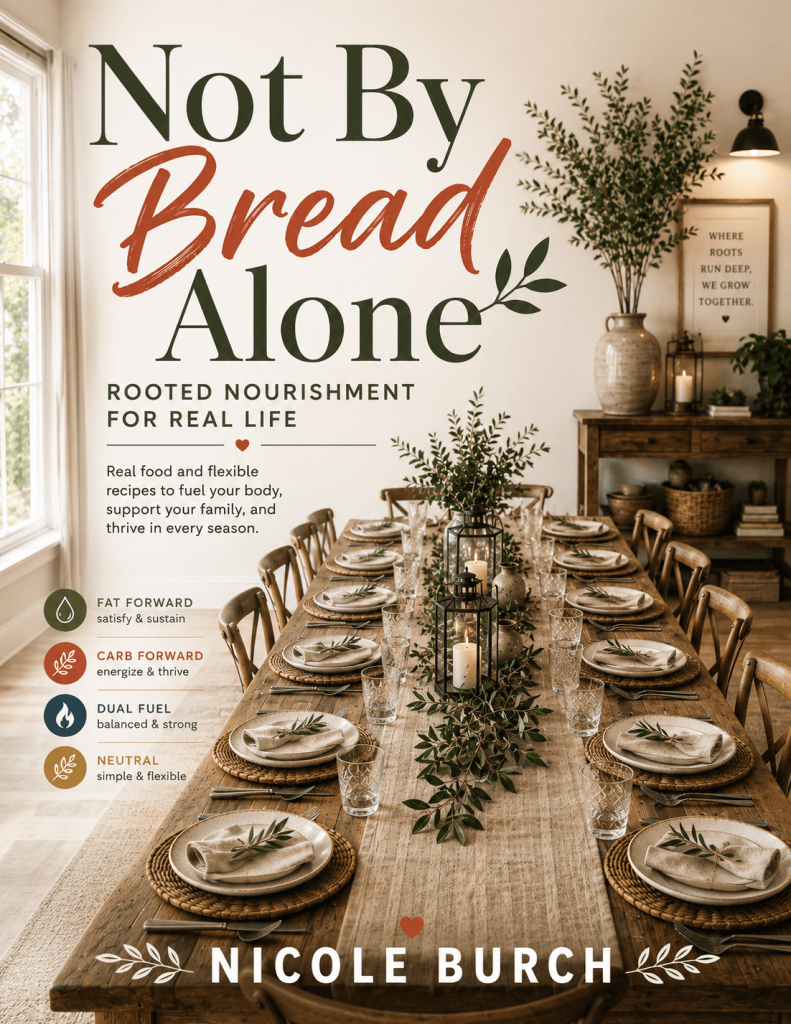
Maybe that’s part of what Not By Bread Alone has been about all along.
Food doesn’t have to be extraordinary to carry something meaningful.
Sometimes you start with a forgotten ingredient.
Sometimes you start with a food boundary.
Sometimes you start with:
What am I supposed to do with this?
You make yogurt.
You get whey.
You make lemonade.
And somewhere along the way, the thing that could have been poured down the drain becomes the drink your children remember sitting on the kitchen counter.
Not every meaningful food memory begins with something extraordinary. Sometimes we make the ordinary extraordinary by giving it a story.
The Treehouse Standard
Safe, not sorry. Always.
I don’t ask you to trust my ingredient interpretation—not even my own family does.
Read the label. Verify the source. Make the decision that best supports your home.
My household is gluten-free, so the ingredients and products I choose are selected with our family’s boundaries in mind. Brands, formulations, manufacturing practices, and labels can change. Always verify the specific products you purchase against the food boundaries that matter in your own household.
Affiliate Disclosure — Content Notice — Legal Disclosures — Newsletter — Home —TOP



Nicole Burch is a Trim Healthy Lifestyle Coach, author, and holistic family life mentor helping women and families rebuild through rooted rhythms, personal governance, and sustainable living. Blending nourishment, discernment, and restoration, she guides others toward resilience, peace, and healing—creating lives that are grounded, aligned, and nurtured at home.
Wellness That Withstands.
Rooted. Resilient. Restored.
Affiliate Disclosure — Content Notice — Legal Disclosures — Newsletter — Home —TOP

Trim Healthy Coach Disclaimer
Nicole Burch is a Certified Trim Healthy Mama Lifestyle Coach, independently offering services based on the THM plan. This coach is not an employee or agent of Trim Healthy Mama, LLC. Coaching services are independently managed, and THM is not responsible for results, business practices, or claims made by this coach.
Affiliate Disclosures
As an Amazon Associate, I may link to specific products that I believe in and trust. This is an affiliate link, and I may receive a small commission at no additional cost to you.
As a Trim Healthy Affiliate I may link to specific products that I believe in and trust from Trim Healthy Mama, LLC. If you make any purchases through my link I may receive a small commission at no additional cost to you
As a Queen of Thrones Affiliate I may link to specific products that I believe in. If you make any purchases through my link I may receive a small commission at no additional cost to you.
River Hills Harvest and Azure Standard referral links may be linked to specific products or images on this blog. If you make any purchases through my link I may receive a small commission at no additional cost to you.







Leave a Reply