
Affiliate Disclosure — Content Notice — Legal Disclosures — Newsletter — Home — Bottom of Post
I have included links. If you make a purchase through any of these links in the post, as an Amazon Influencer, I may receive a small commission at no additional cost to you.
You’ve probably noticed…
If you’ve spent much time in gluten-free or Trim Healthy kitchens, you’ve probably noticed one thing pretty quickly.
Sweeteners can get expensive. Especially powdered sweeteners.
For years, I’ve made my own powdered sweetener at home. It saves our family money, lets me control exactly what’s in it, and works beautifully in everything from frostings to cheesecakes to cookies.
After years of baking for our family of ten, this is the method I’ve settled on.
Not because it’s the only way…I have, and would again, bought prepared versions.
Because it’s the one that keeps working, which makes the time worth it to me.
Why I Make My Own
When I first began baking this way, I bought the premade powdered sweeteners.
They’re convenient. But they’re also expensive for a any household, especially mine.
When you’re baking every week, making birthday cakes, frosting cookies, preparing desserts for family gatherings, and keeping ingredients on hand for a house full of people, convenience adds up quickly.
Eventually I realized something simple.
I already had the ingredients.
Why wasn’t I just making my own?
I’ve been doing it ever since.
Affiliate Disclosure—Content Notice—Legal Disclosures—Newsletter—Home—Bottom of Post—top
My Everyday Powdered Sweetener Blend
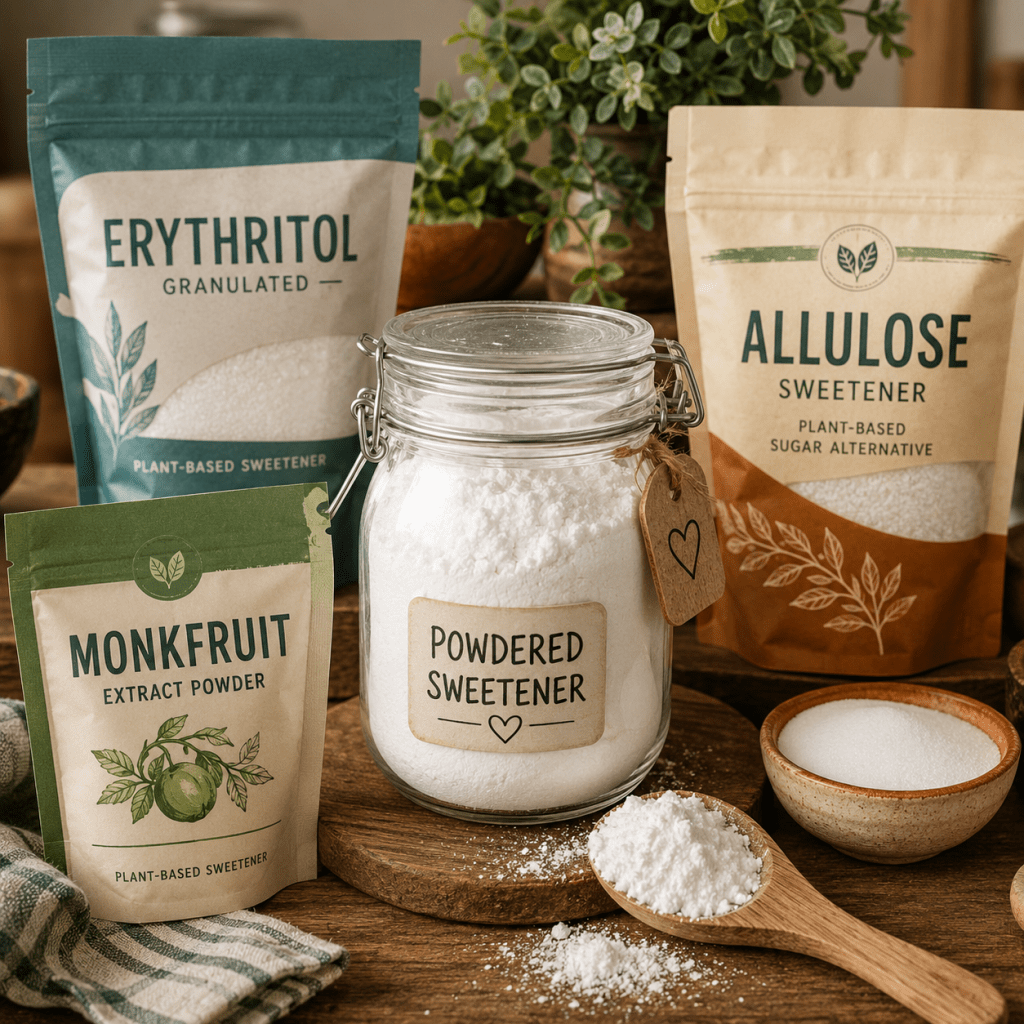
Ingredients
1 cup granulated erythritol
¼–½ teaspoon pure monk fruit extract powder
That’s it.
The exact amount of monk fruit depends on the brand you’re using and your family’s preference for sweetness.
I usually begin with ¼ teaspoon, taste it, and increase to ½ teaspoon if needed.
Want a Brown Powdered Sweetener?
Sometimes a recipe needs a little deeper flavor.
For those recipes, I simply add:
1 teaspoon blackstrap molasses
Mix this, completely, into your granulated sweetener before blending into a powder.
The molasses distributes surprisingly well and creates a richer, lightly brown sweetener that’s wonderful in recipes that benefit from a hint of molasses flavor. I do this merely for the convenience of not getting molasses on a measuring spoon in the moment, but you can add it to the frosting as you mix it too.
Affiliate Disclosure—Content Notice—Legal Disclosures—Newsletter—Home—Bottom of Post—top
Method One: Blend Your Own Powdered Sweetener
This is the method I use most often.
Simply place the granulated erythritol into a blender.
Blend until it becomes a very fine powder.
How do you know it’s ready?
You’ll actually notice the powder beginning to swirl and float inside the blender as the blades move it around.
That’s usually the point where I stop.
One thing that often surprises people…
You don’t need a high-powered blender.
I’ve done this successfully in ordinary household blenders for years
Why I Don’t Recommend using a Spice Grinder
I learned this one the hard way…don’t be like me.
I assumed a spice grinder would work even better because it finely grinds things, right?
Instead…
The smaller grinding chamber created enough heat to partially melt the erythritol.
As it cooled between batches, the sweetener hardened around the blades. I honestly thought I had broken the grinder. After some investigating, I realized the blades were simply glued in place by cooled sweetener.
Thankfully it wasn’t ruined.
But it convinced me to go back to the blender.
I’ve never had that problem there.
Now Add the Monk Fruit
Once your erythritol is powdered, stir or blend in your monk fruit extract powder.
Then taste it. Don’t skip this step.
If it still seems flat or not quite sweet enough, add another ¼ teaspoon of monk fruit and blend again.
You’re trying to create something that tastes like powdered sugar—not just powdered erythritol.
Taking a few extra minutes here saves you from adjusting every recipe later.
Will you adjust the flavors in your frosting too? YES!
But taking a few extra minutes here saves you from adjusting every element later, and reduces the risk of over sweetening the entire bake.
Affiliate Disclosure—Content Notice—Legal Disclosures—Newsletter—Home—Bottom of Post—top
Method Two: Using Cup-for-Cup Sweeteners
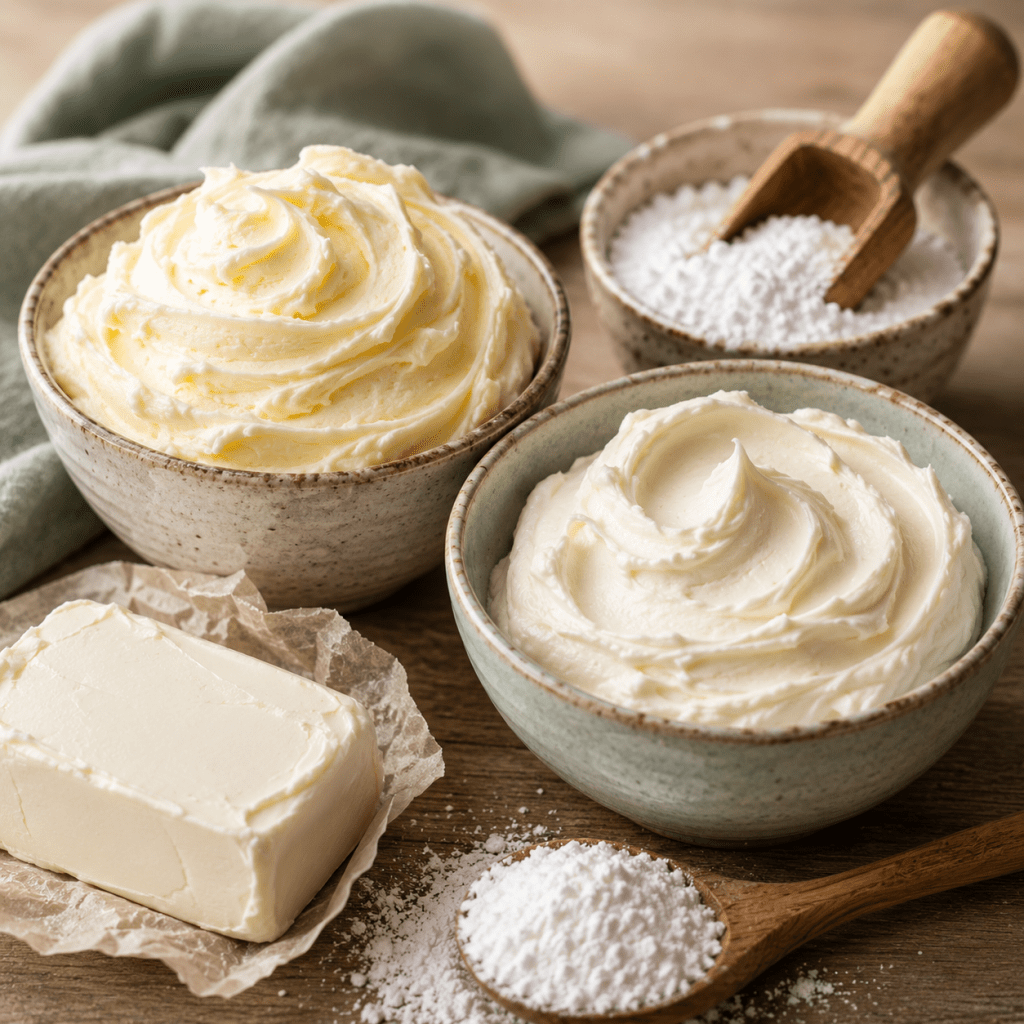
If you’re working with sweeteners that already measure cup-for-cup with sugar, the process is even easier.
Examples include:
Allulose
Xylitol*
Simply blend until powdered. That’s it.
No monk fruit adjustment needed.
*If you choose xylitol, please remember that it is extremely dangerous for dogs and can be fatal if consumed. If you have pets, take appropriate precautions or choose another sweetener instead.
Why I Only Make Small Batches
I generally make about one quart, fully powdered and mixed, at a time.
Why?
Because homemade powdered sweeteners don’t contain anti-caking agents.
Eventually they’ll settle together into one impressive solid chunk, as they respond to humidity with the increase in surface area.
Can you fix it?
Absolutely. Just toss it back into the blender.
The hardest part is usually convincing the giant sweetener brick to come out of the jar in the first place.
Trust me…that’s the real workout.
Affiliate Disclosure—Content Notice—Legal Disclosures—Newsletter—Home—Bottom of Post—top
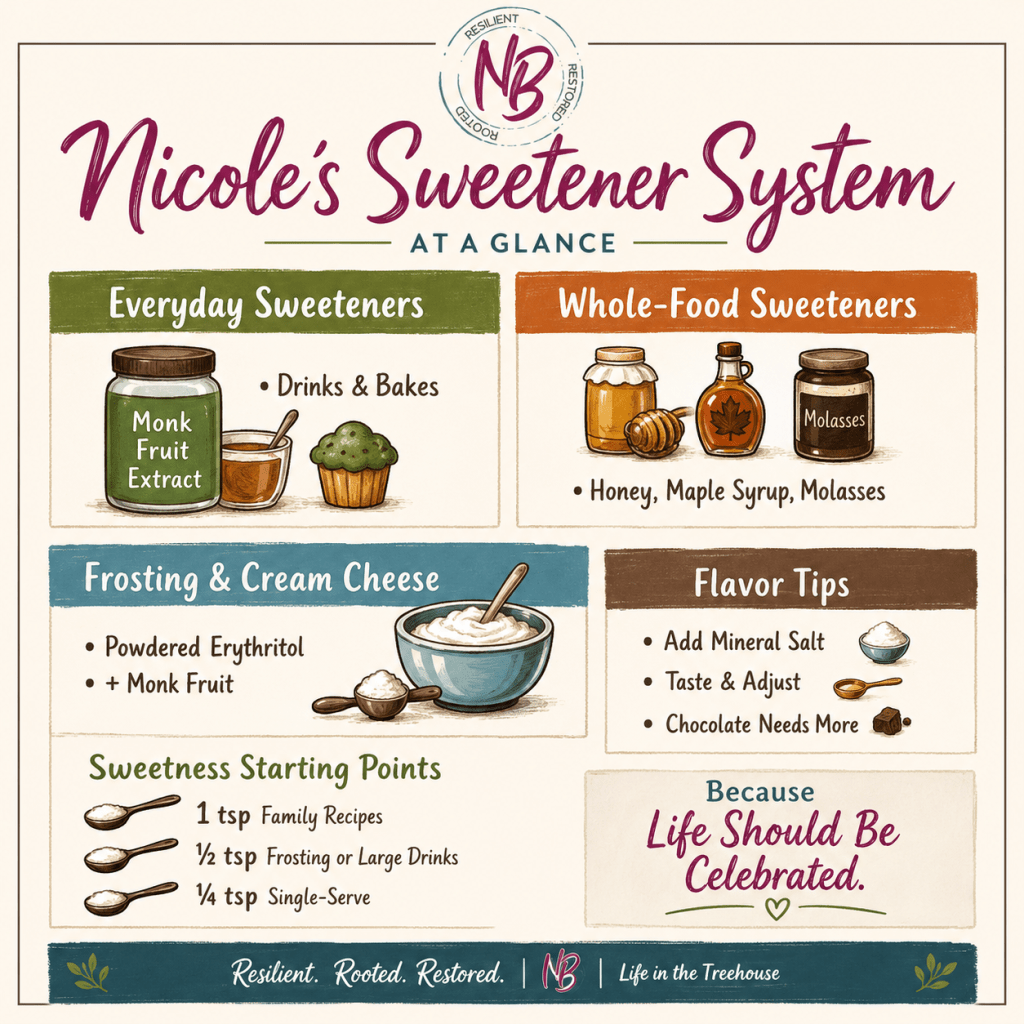
What I’ve Learned After Years of Baking
I’ve used both of these methods of making powdered sweetener, for years.
Both work beautifully in my recipes.
Both produce frostings, cheesecakes, cookies, glazes, glostings and desserts that my family enjoys.
At this point, making my own powdered sweetener is simply part of my kitchen rhythm.
Buying in Bulk Saves Us Money
One of the biggest reasons I continue making my own is the cost.
I typically purchase:
3–5 pound bags of granulated sweetener
1-pound bag of pure monk fruit extract powder
Before our teenagers became daily coffee drinkers, a 4-ounce bag easily lasted our family of ten through:
My daily coffee
My husband’s drinks
Sweetening oatmeal for the kids and myself
One family dessert every week (usually twelve servings, minimum)
Once several teenagers started enjoying coffee every day, we began buying two 4-ounce bags during that same period.
Even with that increase, it’s still one of the most economical ingredients in my pantry, for a sweetener.
Because I buy my granulated sweeteners in bulk, I’m not constantly replacing expensive bags of premade powdered sweetener either, which gives this ingredient multiple ways to help support our budget.
Links
Here are links to brands I have personally bought over the years. I only included the ones that were good enough to buy again, and again. I generally browse them all and get the ones that are the lowest cost per ounce when I need them.
If you make a purchase through any of these links, as an Amazon Influencer, I may receive a small commission at no additional cost to you.
Prepared Powdered Sweeteners…Because we all need Faster Foods.
Lakanto Classic Monk Fruit Sweetener With Allulose
Lakanto Powdered Monk Fruit Sweetener With Erythritol
Powdered Allulose & Monk Fruit Sweetener Blend
Anthony’s Confectioner’s Erythritol Powder
Vitamatic Xylitol Pure Powder
Pure Monk Fruit Extract Powders
Tejonva – 5 Ounces
Tejonva – 1 Pound
Teakihut – 4 Ounces
Purisure – 4.4 Ounces
Organic Monk Fruit Extract Powder, 3.5 Ounces
100% Monk Fruit Extract – 1.5 Ounces
NAMANNA Pure Monk Fruit Sweetener – 2.82 Ounces
Granulated Sweeteners
Organic erythritol sweetener
Anthony’s Erythritol
DureLife XYLITOL
Allulose Sweetener 6 Pounds
Anthony’s Allulose Sweetener
Affiliate Disclosure—Content Notice—Legal Disclosures—Newsletter—Home—Bottom of Post—top
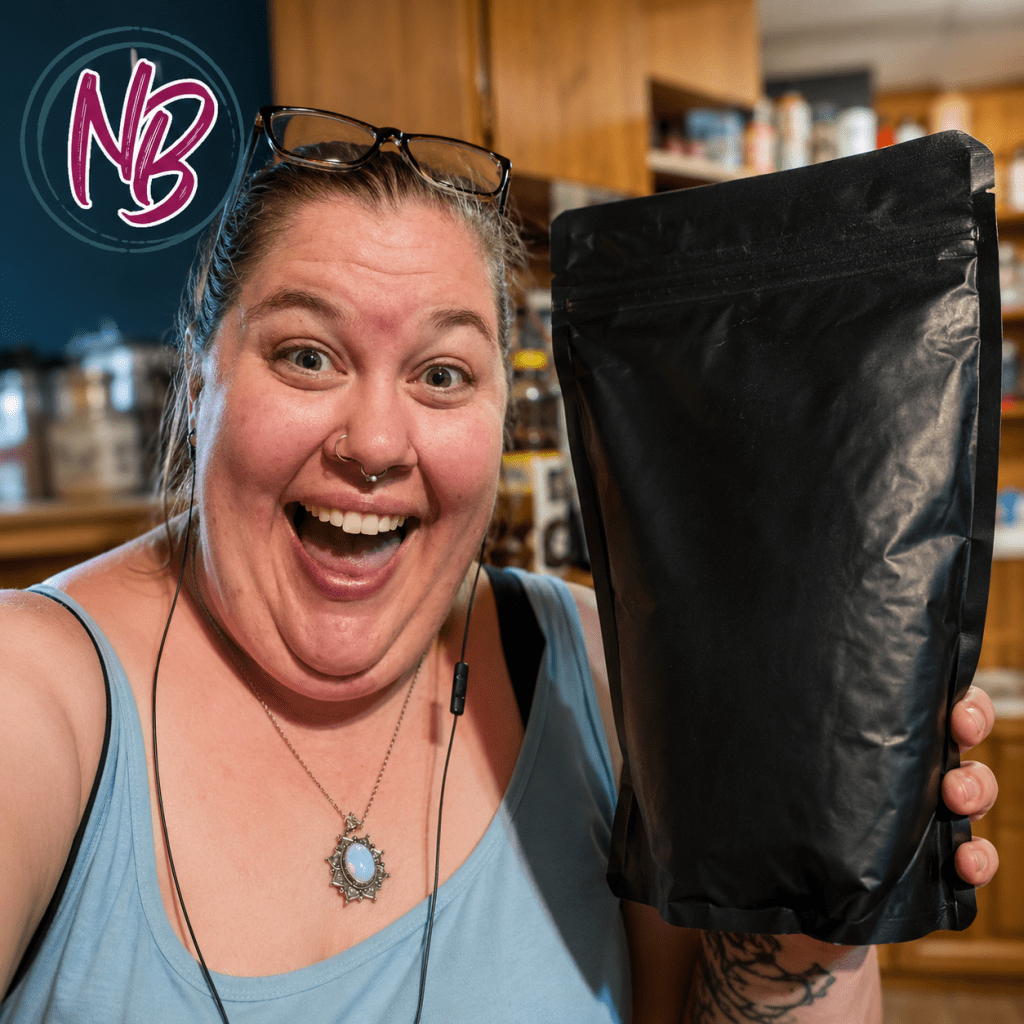
Nicole’s Kitchen Notes
This recipe reflects what has worked well in my own kitchen after years of gluten-free and Trim Healthy baking. Sweeteners vary by brand and concentration, so I always recommend tasting and adjusting to suit your preferences. What works beautifully in my recipes may need slight adjustments in yours.
Safe, not sorry. Always.
I don’t ask you to trust my ingredient interpretation—not even my own family does. Read the label. Verify the source. Make the decision that best supports your home.
Find more lived experience and support:
What Years of Gluten-Free Baking Taught Me About Sweeteners
Find your Sweet Spot with Natural Sweeteners
Why wanting sweet was never the problem
Drinks & Water in Fuel Flow
My Gluten Free Recipes
Affiliate Disclosure — Content Notice — Legal Disclosures — Newsletter — Home —TOP


Nicole Burch, is a Trim Healthy Lifestyle Coach, author, and holistic family life mentor helping women and families rebuild through rooted rhythms, personal governance, and sustainable living. Blending nourishment, discernment, and restoration, she guides others toward resilience, peace, and healing—creating lives that are grounded, aligned, and nurtured at home.
Wellness That Withstands.
Rooted. Resilient. Restored.
Affiliate Disclosure — Content Notice — Legal Disclosures — Newsletter — Home —TOP
Trim Healthy Coach Disclaimer
Nicole Burch is a Certified Trim Healthy Mama Lifestyle Coach, independently offering services based on the THM plan. This coach is not an employee or agent of Trim Healthy Mama, LLC. Coaching services are independently managed, and THM is not responsible for results, business practices, or claims made by this coach.
Affiliate Disclosures
As an Amazon Associate, I may link to specific products that I believe in and trust. This is an affiliate link, and I may receive a small commission at no additional cost to you.
As a Trim Healthy Affiliate I may link to specific products that I believe in and trust from Trim Healthy Mama, LLC. If you make any purchases through my link I may receive a small commission at no additional cost to you.
As a Queen of Thrones Affiliate I may link to specific products that I believe in. If you make any purchases through my link I may receive a small commission at no additional cost to you.








Leave a Reply